
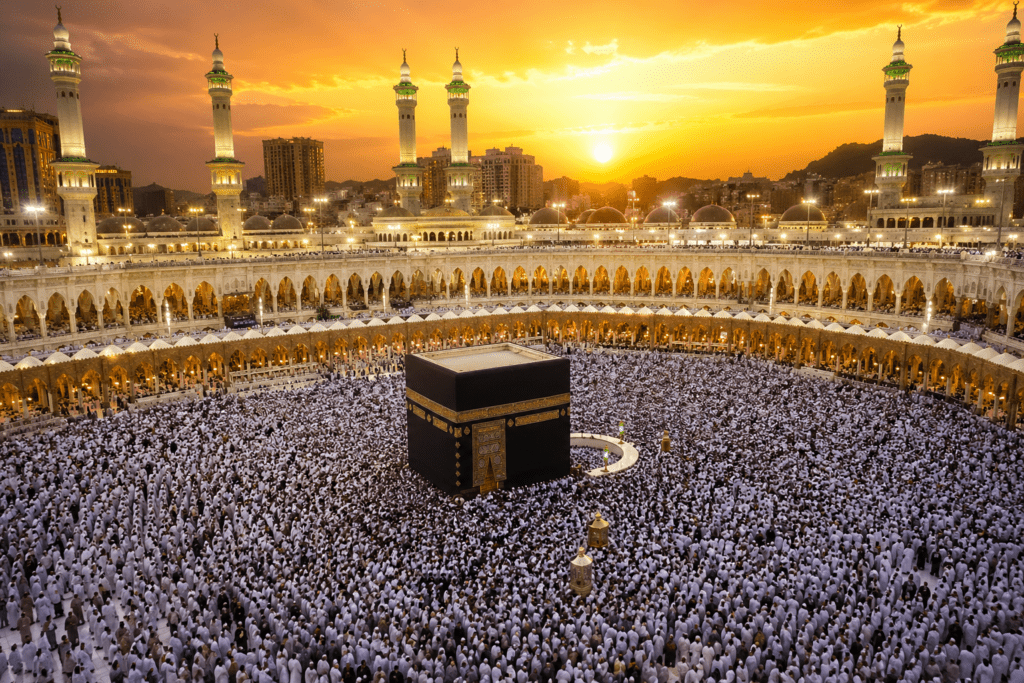
Planning for Hajj 2026 is more than just preparing for a journey—it’s about getting ready for one of the most meaningful experiences in a Muslim’s life. Every year, millions of believers travel to Makkah to fulfill this sacred obligation, following a path that has been practiced for centuries. Whether it’s your first time or you’re helping someone else prepare, understanding the basics early can make the entire process smoother and less overwhelming.
In this complete guide, you’ll find everything you need to know about Hajj 2026—from expected dates and costs to registration steps, rituals, and practical travel tips. The goal is simple: to help you stay organized, avoid common mistakes, and focus on what truly matters—your spiritual connection and purpose during this once-in-a-lifetime journey.
What Is Hajj 2026?
Hajj 2026 refers to the annual Islamic pilgrimage to Makkah that Muslims around the world are expected to perform during the specific days of Dhul Hijjah in the year 2026. It is not just a journey of travel, but a deeply spiritual experience that brings millions of believers together in one place, all focused on worship, reflection, and obedience to Allah.
Every year, Hajj follows the same sacred rituals that date back thousands of years to the time of Prophet Ibrahim (Abraham). What makes Hajj 2026 unique is simply the calendar year—it carries the same religious significance, rules, and spiritual goals as any other Hajj. For those planning to go, it becomes a once-in-a-lifetime opportunity to reset their faith, seek forgiveness, and strengthen their connection with Allah.
Meaning of Hajj in Islam
In Islam, the word “Hajj” literally means “to intend a journey” or “to set out for a place.” But in a religious sense, it specifically refers to the pilgrimage to Makkah performed with the intention of worshipping Allah during the designated days of Dhul Hijjah.
Hajj is not just about physical movement from one place to another. It represents a spiritual journey where a muslims leaves behind daily distractions and focuses entirely on faith. Pilgrims wear simple clothing, follow specific rituals, and stand equal before Allah—regardless of their background, status, or nationality.
Importance of Hajj for Muslims
Hajj holds a special place in the life of a Muslim because it is one of the most powerful acts of worship in Islam. It brings together people from all over the world, creating a sense of unity that is rarely seen elsewhere.
For many, Hajj is a turning point. It’s a chance to seek forgiveness for past sins, make sincere prayers, and start fresh with a stronger commitment to faith. The experience teaches patience, humility, and gratitude—qualities that stay with a person long after the journey ends.
Beyond the individual level, Hajj also strengthens the global Muslim community. Standing side by side with millions of others reminds believers that they are part of something much bigger than themselves.
Why Hajj Is One of the Five Pillars of Islam
Hajj is one of the Five Pillars of Islam because it represents a core act of worship that every eligible Muslim is required to perform at least once in their lifetime. These pillars form the foundation of a Muslim’s faith and practice, and Hajj completes that spiritual framework.
What makes Hajj unique among the pillars is that it combines physical effort, financial ability, and deep spiritual intention. A person must be mentally, physically, and financially capable before undertaking this journey.
By performing Hajj, a Muslim demonstrates complete submission to Allah, following rituals that have been preserved for generations. It is a powerful reminder of faith, equality, and devotion—values that lie at the heart of Islam.
Hajj 2026 Dates and Timeline
Planning for Hajj 2026 starts with understanding the exact dates and how the pilgrimage unfolds over several days. Unlike the Gregorian calendar, Hajj follows the Islamic lunar calendar, which means the dates shift slightly every year. Even so, the sequence of rituals and the timeline remain the same, making it easier for pilgrims to prepare in advance.
For anyone intending to perform Hajj in 2026, knowing the expected schedule helps with travel planning, booking packages, and mentally preparing for each step of the journey.
Expected Hajj 2026 Dates (Islamic Calendar)
Hajj takes place every year during the month of Dhul Hijjah, which is the last month of the Islamic calendar. In 2026, Hajj is expected to fall around late May to early June 2026 in the Gregorian calendar.
However, it’s important to understand that Islamic dates depend on the sighting of the moon. Because of this, the exact dates may vary slightly depending on official announcements from Saudi Arabia closer to the time.
Even with this small uncertainty, pilgrims usually plan based on expected dates and adjust once the final confirmation is made.
When Does Hajj 2026 Start and End?
Hajj officially begins on the 8th of Dhul Hijjah and continues until the 13th of Dhul Hijjah. This means the main pilgrimage lasts about 5 to 6 days, although most pilgrims stay longer in Makkah and Madinah for additional prayers and visits.
- Start of Hajj: 8th Dhul Hijjah (Day of Tarwiyah)
- End of Hajj: 13th Dhul Hijjah (final day of stoning ritual)
While these are the core days, many pilgrims arrive earlier to prepare and stay afterward to complete their spiritual journey in a more relaxed way.
Key Days of Hajj (8th to 13th Dhul Hijjah)
Each day of Hajj has its own significance, and understanding these key moments helps pilgrims perform the rituals with clarity and purpose.
- 8th Dhul Hijjah (Day of Tarwiyah):
Pilgrims enter the state of Ihram and travel to Mina, where they spend the day in prayer and preparation. - 9th Dhul Hijjah (Day of Arafat):
This is the most important day of Hajj. Pilgrims gather at the plain of Arafat for supplication and reflection. Missing this day means missing Hajj. - Night of 9th (Muzdalifah):
After sunset, pilgrims move to Muzdalifah, where they spend the night under the open sky and collect pebbles for the next ritual. - 10th Dhul Hijjah (Eid al-Adha):
Pilgrims perform the stoning of the largest pillar (Rami), offer sacrifice (Qurbani), and either shave or trim their hair. This day is also celebrated worldwide as Eid al-Adha. - 11th–13th Dhul Hijjah (Days of Tashreeq):
Pilgrims return to Mina and perform the stoning ritual on all three pillars each day. These days are filled with remembrance of Allah and completion of remaining rituals.
Understanding this timeline not only helps in planning but also allows pilgrims to focus on the deeper meaning behind each step, making the journey more meaningful and organized.
Namaz Related Post
Hajj 2026 Packages and Cost
When planning for Hajj 2026, one of the biggest concerns for most pilgrims is the cost and the type of package to choose. Hajj is not a simple trip—it involves international travel, accommodation in Makkah and Madinah, transport between holy sites, and guided religious support. Because of this, packages are designed to make the entire journey organized and stress-free.
The total cost can vary widely depending on your country, travel class, hotel distance from Haram, and level of comfort you choose. Understanding these options helps you pick a package that fits both your budget and your needs.
Hajj 2026 Cost from India, Pakistan, UK, USA
Hajj costs are different for every country mainly due to flight prices, currency differences, and service standards. Here’s a realistic idea of what pilgrims can expect in 2026:
- From India:
Government packages usually range between ₹2.25 lakh to ₹2.75 lakh, while private packages can go up to ₹5–7 lakh or more depending on luxury level - From Pakistan:
Estimated costs are similar to India, generally ranging between ₹11.5–12.5 lakh (equivalent) depending on package type and facilities - From the UK:
Budget packages start around £5,500, while premium options can exceed £15,000 per person - From the USA:
Standard packages typically range between $7,500 to $14,000, and luxury packages can go beyond $18,000
Overall, the biggest price difference comes from flight distance and hotel quality. The closer your accommodation is to the Haram, the higher the cost.
Government vs Private Hajj Packages
When booking Hajj, pilgrims usually choose between government schemes and private tour operators.
Government Hajj Packages:
These are generally more affordable and organized by official authorities. For example, in India, the Haj Committee offers subsidized or controlled-cost packages. However, selection is often done through a lottery system, and facilities are more basic compared to private options.
Private Hajj Packages:
Private operators offer more flexibility and comfort. You can choose better hotels, shorter travel durations, and additional services like guided tours and smaller group sizes. However, these packages are more expensive.
The key difference comes down to cost vs comfort. Government packages are budget-friendly, while private packages focus on convenience and premium experience.
Budget, Economy, and VIP Hajj Packages
Hajj packages are usually divided into three main categories based on comfort and services:
Budget / Economy Packages:
These are the most affordable options. Accommodation is usually farther from the Haram, and rooms may be shared with more people. Basic transport and meals are included.
Standard / Economy Plus Packages:
These offer a balance between cost and comfort. Hotels are closer to Haram, rooms are less crowded, and services are more organized.
VIP / Luxury Packages:
These are high-end options designed for maximum comfort. Pilgrims stay in 5-star hotels, often within walking distance of Haram, and receive premium services like private tents in Mina, better transport, and personalized assistance.
Your choice depends on your budget, physical ability, and how much comfort you prefer during the journey.
What Is Included in Hajj Packages?
Most Hajj packages are designed to cover all essential aspects of the pilgrimage so that pilgrims can focus on ibadat instead of logistics. Typically, a standard Hajj package includes:
- Round-trip international flights
- Hajj visa processing
- Accommodation in Makkah and Madinah
- Transport between holy sites (Mina, Arafat, Muzdalifah)
- Meals (full or partial depending on package)
- Guidance from group leaders or scholars
- Medical support and basic insurance
- Mina tent accommodation during Hajj ayyam
Some premium packages may also include extras like private transport, better hotel views, or dedicated guides.
Before booking, it’s always important to carefully check what is included—and what is not—so there are no surprises later.
Hajj Rituals Step-by-Step Guide
Performing Hajj can feel overwhelming at first, especially for beginners, because it involves a sequence of rituals carried out over several days. But once you understand the order and purpose behind each step, it becomes much more manageable—and deeply meaningful.
Each ritual is connected to the legacy of Prophet Ibrahim (AS) and teaches lessons of patience, obedience, and complete trust in Allah. Let’s break it down in a simple, step-by-step way.
Step-by-Step Hajj Guide for Beginners
Hajj follows a clear sequence that every pilgrim performs during specific days of Dhul Hijjah:
- Enter the state of Ihram before reaching Makkah
- Perform Tawaf and Sa’i (if doing Hajj Tamattu)
- Travel to Mina on 8th Dhul Hijjah
- Spend the day of 9th Dhul Hijjah at Arafat
- Stay overnight in Muzdalifah
- Perform Rami, Qurbani, and hair cutting on 10th
- Complete Tawaf al-Ifadah in Makkah
- Continue Rami on 11th–13th Dhul Hijjah
Following this order ensures that all obligations of Hajj are completed correctly.
Ihram Rules and Restrictions
Ihram is the sacred state a pilgrim enters before starting Hajj. It begins with intention (niyyah) and wearing specific clothing.
- Men wear two simple white cloths (unstitched)
- Women wear modest, loose clothing (no specific color required)
While in Ihram, certain actions are restricted:
- No cutting hair or nails
- No use of perfume
- No arguments or harmful behavior
- No hunting or harming animals
- Married couples must avoid physical intimacy
Ihram is not just about clothing—it’s about entering a state of purity, humility, and focus on worship.
Tawaf (Circumambulation of Kaaba)
Tawaf is the act of walking around the Kaaba seven times in an anti-clockwise direction inside Masjid al-Haram.
Each round starts from the Black Stone (Hajar al-Aswad). Pilgrims either kiss it, touch it, or simply point toward it if they cannot reach it.
During Tawaf:
- Pilgrims make duas and remember Allah
- There is no fixed prayer, so you can speak from your heart
Tawaf symbolizes unity—millions moving together in one direction, worshipping one God.
Sa’i Between Safa and Marwah
Sa’i is performed after Tawaf and involves walking back and forth seven times between the hills of Safa and Marwah.
This ritual honors the struggle of Hajra (AS), who ran between these hills searching for water for her son Ismail (AS).
- The distance is covered seven times
- Men walk briskly in the marked green area
- Pilgrims make duas throughout
Sa’i teaches patience, effort, and trust in Allah’s help.
Standing at Arafat (Wuquf)
Wuquf at Arafat on the 9th of Dhul Hijjah is the most important part of Hajj. Without it, Hajj is not valid.
Pilgrims gather in the plain of Arafat from noon until sunset:
- They stand, sit, or raise their hands in dua
- They ask for forgiveness and mercy
- They reflect deeply on their life and faith
This day is often described as a preview of the Day of Judgment, where everyone stands equal before Allah.
Muzdalifah Night Stay
After sunset on the day of Arafat, pilgrims travel to Muzdalifah.
Here, they:
- Pray Maghrib and Isha together
- Sleep under the open sky
- Collect small pebbles for the next ritual (Rami)
This simple night teaches humility and detachment from worldly comforts.
Rami (Stoning the Devil)
Rami is the symbolic act of throwing pebbles at three pillars (Jamarat), representing the rejection of evil.
- On the 10th Dhul Hijjah: stone the largest pillar (7 pebbles)
- On 11th–13th: stone all three pillars (7 each)
This ritual reflects the moment when Prophet Ibrahim (AS) rejected the temptations of Shaytan.
Qurbani (Sacrifice)
After Rami on the 10th Dhul Hijjah, pilgrims perform Qurbani (animal sacrifice).
- It commemorates Prophet Ibrahim’s willingness to sacrifice his son for Allah
- Today, animals are sacrificed, and meat is distributed to the needy
In most cases, this is arranged through official services, so pilgrims don’t have to perform it manually.
Halq or Taqsir (Hair Cutting)
The final step of the main rituals is cutting the hair:
- Halq: Shaving the head completely (for men)
- Taqsir: Trimming a small portion of hair (men and women)
Women only trim a small portion of their hair.
This act symbolizes renewal and leaving behind past sins. After this, many restrictions of Ihram are lifted, marking the completion of major Hajj rituals.
Types of Hajj Explained
Not every pilgrim performs Hajj in the same way. In fact, there are three different types of Hajj, and each one follows a slightly different approach in terms of intention, rituals, and sequence.
Choosing the right type depends on your travel plan, whether you perform Umrah along with Hajj, and sometimes the package you select. Understanding these types helps you avoid confusion and perform your pilgrimage correctly.
Hajj Tamattu
Hajj Tamattu is the most common and widely recommended type, especially for international pilgrims.
In this type, a pilgrim performs Umrah first, then comes out of the state of Ihram, and later enters Ihram again for Hajj.
Here’s how it works:
- Perform Umrah (Tawaf + Sa’i + hair cutting)
- Exit Ihram and live normally for a few days
- Re-enter Ihram on 8th Dhul Hijjah for Hajj
Because it gives a break between Umrah and Hajj, it is considered easier and more comfortable—especially for first-time pilgrims.
However, Qurbani (sacrifice) is mandatory in this type.
Hajj Qiran
Hajj Qiran is when a pilgrim performs Umrah and Hajj together in one Ihram, without coming out of it in between.
In this type:
- You enter Ihram once with the intention of both Umrah and Hajj
- Perform Tawaf and Sa’i
- Remain in Ihram until all Hajj rituals are completed
This means you stay in the state of Ihram for a longer period, which can be physically and mentally more demanding.
Like Tamattu, Qurbani is also required in Hajj Qiran.
Hajj Ifrad
Hajj Ifrad is the simplest in terms of structure, as it involves performing only Hajj, without Umrah.
In this type:
- You enter Ihram with the intention of Hajj only
- Perform all Hajj rituals
- No Umrah is included
One key difference is that Qurbani is not obligatory in Hajj Ifrad (though it can still be done voluntarily).
This type is often chosen by residents of Saudi Arabia or those who are not combining Umrah with Hajj.
Which Type of Hajj Is Best?
There isn’t a single “best” type of Hajj for everyone—it depends on your situation.
- For most international pilgrims: Hajj Tamattu is usually the best choice because it is easier and more flexible
- For those who want to combine rituals in one Ihram: Hajj Qiran is suitable, though more demanding
- For those focusing only on Hajj without Umrah: Hajj Ifrad is a simple option
In practical terms, many travel packages—especially from countries like India—are designed around Hajj Tamattu, making it the most convenient option for beginners.
The best choice is the one that allows you to perform your ibadat with ease, focus, and sincerity.
Hajj 2026 Rules and Guidelines
Hajj 2026 comes with a set of updated rules and guidelines issued by Saudi authorities to ensure safety, crowd control, and smooth organization. Over the years, these rules have become stricter—not to make things difficult, but to protect pilgrims and manage the massive number of people arriving in Makkah.
If you’re planning for Hajj 2026, it’s important to understand these guidelines clearly so you don’t face any issues during travel or the pilgrimage itself.
Saudi Government Hajj Rules 2026
The Saudi government has introduced strict regulations for Hajj 2026, especially regarding entry, permits, and visa usage.
- Only pilgrims with a valid Hajj visa are allowed to perform Hajj
- Performing Hajj on a tourist or Umrah visa is strictly prohibited and can lead to fines or deportation
- Entry into Makkah is restricted during the Hajj season—only authorized pilgrims can enter
- Carrying an official Hajj permit is mandatory, and violations can result in heavy penalties
These rules are mainly designed to prevent overcrowding and ensure that only registered pilgrims participate in Hajj.
COVID or Health Guidelines (If Applicable)
Health and safety remain a major priority for Hajj 2026. Pilgrims must follow certain medical requirements before traveling:
- Mandatory vaccinations, including COVID-19 (if required at the time)
- Recommended vaccines like seasonal flu and meningitis for added protection
- Pilgrims must be physically fit and free from serious contagious diseases
- Medical certificates may be required during registration
These guidelines help reduce health risks, especially considering the intense physical nature of Hajj and extreme weather conditions.
Age Limit for Hajj 2026
For Hajj 2026, age-related rules have been clearly defined to ensure safety:
- Minimum age: 12 years (children below 12 are not allowed)
- Elderly pilgrims are allowed, but they must be medically fit
- Some countries may require elderly pilgrims (e.g., 80+) to travel with a companion
- People with serious health conditions may not be eligible
The restriction on young children is mainly due to heat, crowd pressure, and physical difficulty during rituals.
Women Traveling Rules for Hajj
Recent updates have made it easier for women to perform Hajj independently.
- Women are now allowed to perform Hajj without a mahram (male guardian)
- However, they must travel with an approved group or organized package
- In some systems, women above a certain age can travel in female groups
- Proper documentation and safety arrangements are still required
This change has made Hajj more accessible while still maintaining safety and organization.
Understanding these rules in advance helps you avoid last-minute problems and ensures your Hajj journey is smooth, safe, and fully compliant with official guidelines.
Hajj Packing List
Packing for Hajj is not like preparing for a normal trip. You’re going for a physically demanding and spiritually focused journey, often in hot weather and crowded conditions. So, the goal is simple: pack light, but pack smart.
Carrying the right items can make your experience much more comfortable, while overpacking can actually make things harder to manage. Let’s break down exactly what you should (and shouldn’t) take with you.
Essential Items for Hajj Travel
These are the basic things every pilgrim should carry, regardless of their package type:
- Valid passport, Hajj visa, and travel documents
- Printed copies of tickets, hotel details, and ID cards
- Small backpack or waist pouch for daily use
- Comfortable walking shoes or sandals
- Lightweight, breathable clothing suitable for hot weather
- Reusable water bottle (to stay hydrated)
- Travel-size toiletries (unscented if possible)
- Power bank and mobile charger
- Basic snacks (like dates or energy bars)
The idea is to keep everything easily accessible because you’ll be moving frequently between locations.
Ihram Clothes and Accessories
Ihram is an essential part of Hajj, so preparing for it properly is important.
For men:
- Two white, unstitched Ihram cloths
- Ihram belt or pouch (to keep money and documents safe)
- Comfortable sandals (that leave the ankles exposed)
For women:
- Loose, modest clothing (no specific color required)
- Headscarf (hijab) and comfortable footwear
Additional useful accessories:
- Safety pins or clips to secure Ihram
- Small towel
- Foldable prayer mat
Make sure your Ihram clothes are comfortable and easy to manage, as you’ll be wearing them during important rituals.
Medicines and Health Essentials
Hajj involves long walking hours, heat, and physical effort, so carrying basic health items is very important.
- Personal prescription medicines (with doctor’s prescription)
- Pain relief tablets
- ORS (oral rehydration salts) to prevent dehydration
- Band-aids and blister care cream
- Hand sanitizer and wet wipes
- Unscented soap and toiletries
- Face mask (useful in crowded areas)
- Sunscreen (unscented)
- Small first aid kit
Even if medical facilities are available, having your own essentials saves time and avoids unnecessary stress.
What Not to Carry for Hajj
Knowing what to avoid is just as important as knowing what to pack.
- Expensive jewelry or unnecessary valuables
- Strong perfumes or scented products (not allowed in Ihram)
- Heavy luggage or too many clothes
- Sharp objects or restricted items
- Excess cash (use secure payment methods instead)
- Items that are not essential for daily use
Keeping your luggage simple helps you stay focused on your عبادत rather than managing your belongings.
A well-planned packing list can make your Hajj journey smoother and more comfortable. When you carry only what you truly need, it allows you to focus on the real purpose of Hajj—your connection with Allah.
Hajj Duas and Prayers
Hajj is not just a physical journey—it is deeply rooted in dua (supplication) and remembrance of Allah. Every step, every movement, and every ritual becomes more meaningful when it is accompanied by sincere prayers.
There is no restriction that you must only recite specific duas. In fact, one of the most beautiful parts of Hajj is that you can speak to Allah in your own words, from your heart. Still, there are some well-known duas and recitations that many pilgrims follow during different rituals.
Important Duas for Hajj
During Hajj, pilgrims are encouraged to stay engaged in constant remembrance of Allah. Some commonly recited duas include:
- Seeking forgiveness (Astaghfirullah)
- Praising Allah (Alhamdulillah, SubhanAllah, Allahu Akbar)
- Sending blessings upon the Prophet (peace be upon him)
- Making personal duas for guidance, mercy, and forgiveness
The best approach is to combine authentic duas with your own personal prayers. Ask for what truly matters to you—this is a time when duas are especially accepted.
Talbiyah (Labbaik Allahumma Labbaik)
The Talbiyah is one of the most important recitations during Hajj, especially after entering the state of Ihram.
لَبَّيْكَ ٱللَّهُمَّ لَبَّيْكَ، لَبَّيْكَ لَا شَرِيكَ لَكَ لَبَّيْكَ،
إِنَّ ٱلْحَمْدَ وَٱلنِّعْمَةَ لَكَ وَٱلْمُلْكَ، لَا شَرِيكَ لَكَ۔
“Labbaik Allahumma Labbaik, Labbaik Laa Shareeka Laka Labbaik,
Innal Hamda Wan Ni‘mata Laka Wal Mulk, Laa Shareeka Lak.”
Meaning (in simple words):
“Here I am, O Allah, here I am. You have no partner. Surely all praise, blessings, and dominion belong to You. You have no partner.”
Pilgrims repeat this frequently throughout Hajj, especially while traveling between holy sites. It reflects complete submission and readiness to obey Allah.
Duas for Tawaf and Sa’i
While performing Tawaf and Sa’i, there are no fixed compulsory duas for each round. This gives you flexibility to connect with Allah in a personal way.
However, one commonly recited dua between the Yemeni Corner and the Black Stone during Tawaf is:
رَبَّنَا آتِنَا فِي الدُّنْيَا حَسَنَةً وَفِي الْآخِرَةِ حَسَنَةً وَقِنَا عَذَابَ النَّارِ
“Rabbana Atina Fid-Dunya Hasanah, Wa Fil-Aakhirati Hasanah, Wa Qina ‘Adhaaban-Naar.”
(O our Lord, grant us good in this world and good in the Hereafter, and protect us from the punishment of the Fire.)
During Sa’i, pilgrims often:
- Make personal duas
- Remember Allah silently or aloud
- Reflect on patience and trust, inspired by the story of Hajra (AS)
The key is to stay spiritually present rather than worrying about memorizing long texts.
Arafat Day Special Duas
The Day of Arafat is considered the most powerful day for making dua during Hajj. It is a time when Allah’s mercy is at its peak, and sins are forgiven.
One of the most recommended duas for this day is:
لَا إِلَٰهَ إِلَّا ٱللّٰهُ وَحْدَهُ لَا شَرِيكَ لَهُ، لَهُ ٱلْمُلْكُ وَلَهُ ٱلْحَمْدُ وَهُوَ عَلَىٰ كُلِّ شَيْءٍ قَدِيرٌ
“La ilaha illallahu wahdahu la sharika lahu, lahul mulku wa lahul hamdu wa huwa ‘ala kulli shay’in qadeer.”
(There is no god but Allah, alone without partner. His is the dominion, and His is the praise, and He has power over all things.)
On this day, pilgrims should:
- Raise their hands and make sincere, long duas
- Ask for forgiveness, guidance, and Jannah
- Pray not only for themselves but for others as well
This is a once-in-a-lifetime opportunity for many, so it’s encouraged to make the most of every moment.
Hajj vs Umrah – Key Differences
Many people often confuse Hajj and Umrah, especially if they are planning their first visit to Makkah. While both are sacred pilgrimages in Islam, they are not the same. They differ in terms of obligation, timing, rituals, and overall significance.
Understanding these differences helps you plan better and also clears a very common question: Is Umrah enough, or do I still need to perform Hajj?
Difference Between Hajj and Umrah
Hajj and Umrah share some rituals, like Tawaf and Sa’i, but they are quite different in scope and importance.
- Timing:
Hajj is performed only during specific days of Dhul Hijjah, while Umrah can be performed at any time of the year. - Obligation:
Hajj is compulsory (once in a lifetime for those who can afford it), whereas Umrah is not obligatory in the same way. - Duration:
Hajj takes around 5–6 days with multiple rituals across different locations. Umrah can usually be completed within a few hours. - Rituals:
Hajj includes additional rituals like Arafat, Muzdalifah, and Rami (stoning), which are not part of Umrah. - Scale:
Hajj is a massive gathering of millions of pilgrims at one time, while Umrah is performed in smaller numbers throughout the year.
In simple terms, Umrah is often called the “lesser pilgrimage,” while Hajj is the main, complete pilgrimage.
Can Umrah Replace Hajj?
No, Umrah cannot replace Hajj.
Even if a person performs Umrah multiple times, the obligation of Hajj still remains if they are physically and financially capable. Hajj has a unique status in Islam that cannot be fulfilled by any other act of worship.
Umrah is still highly rewarding and spiritually beneficial, but it does not carry the same level of obligation or replace the duty of Hajj.
Which One Is Mandatory?
Hajj is mandatory (fard) for every Muslim who meets the required conditions:
- Physically able
- Financially capable
- Safe means of travel available
It must be performed once in a lifetime.
Umrah, on the other hand, is considered:
- Obligatory by some scholars
- Highly recommended (Sunnah Mu’akkadah) by others
Regardless of the scholarly differences, Hajj clearly holds a higher level of obligation.
In short, both Hajj and Umrah are beautiful acts of worship, but they serve different purposes. If you have the ability, Hajj should always be your priority, while Umrah can be performed whenever the opportunity arises.
Hajj 2026 Travel Tips and Advice
Hajj is a once-in-a-lifetime journey for many people, and it comes with both spiritual excitement and physical challenges. With millions of pilgrims gathering in one place, even small mistakes can make things difficult. That’s why proper planning and practical awareness are just as important as spiritual preparation.
The right tips can help you stay comfortable, safe, and focused on your worship throughout Hajj 2026.
First-Time Hajj Tips
If this is your first Hajj, it’s completely normal to feel unsure. The key is to keep things simple and stay patient.
- Learn the rituals before safar so you don’t feel lost
- Stay with your group and follow your guide’s instructions
- Keep a small bag with essentials like water, ID, and phone
- Wear comfortable footwear—walking is a big part of Hajj
- Don’t rush rituals; focus on doing them correctly
Most importantly, remind yourself that Hajj is not about perfection—it’s about sincerity and effort.
How to Avoid Common Mistakes During Hajj
Many pilgrims make small but avoidable mistakes, especially due to lack of preparation.
- Not understanding the correct order of rituals
- Overpacking and struggling with luggage
- Ignoring hydration and getting exhausted
- Arguing or losing patience in crowded situations
- Missing important timings, especially on the Day of Arafat
You can avoid these by staying calm, following guidance, and preparing in advance. When in doubt, always ask your group leader or a knowledgeable person.
Safety Tips for Pilgrims
Safety should always be a priority during Hajj due to the large crowds and hot weather.
- Always carry your ID card and Hajj permit
- Keep emergency contact details with you
- Stay hydrated—drink water regularly, even if you’re not thirsty
- Avoid walking alone, especially at night
- Follow official instructions and crowd control guidelines
- Take breaks when needed—don’t overexert yourself
Simple precautions can prevent serious problems and help you complete your journey peacefully.
Managing Crowds During Hajj
Crowds are one of the biggest challenges during Hajj, especially in places like Mina, Arafat, and during Tawaf.
- Move with the flow of people—don’t push against the crowd
- Choose less crowded times if possible for certain rituals
- Stay patient and avoid panic in tight spaces
- Keep your belongings secure and close to you
- If you get separated, go to a pre-decided meeting point
Remember, everyone around you is there for the same purpose. Staying calm and respectful makes the experience smoother not just for you, but for others as well.
With the right mindset and preparation, Hajj becomes much easier to manage. These practical tips allow you to focus less on problems and more on the true purpose of your journey—connecting with Allah.
Accommodation and Transport in Hajj
During Hajj, your comfort and movement depend heavily on how well accommodation and transport are arranged. Since millions of pilgrims gather in a limited area, everything is organized in a structured way by authorities and Hajj operators.
Understanding where you’ll stay and how you’ll move between holy sites helps reduce confusion and allows you to focus more on your ibadat rather than logistics.
Hotels in Mecca and Medina
Most pilgrims stay in hotels in Makkah (Mecca) and Madinah before and after the main days of Hajj.
- Hotels near the Haram are more expensive but very convenient
- Budget hotels are located farther away and may require shuttle transport
- Rooms are usually shared (2–5 unit depending on package)
- Facilities typically include air conditioning, beds, and basic services
In Madinah, the environment is generally calmer, giving pilgrims a chance to rest and pray peacefully before or after Hajj.
Mina Tent Accommodation Explained
During the main days of Hajj, pilgrims stay in Mina, where traditional hotels are replaced by large tent setups.
- Mina is known as a “tent city” designed to host millions of pilgrims
- Tents are air-conditioned and organized by country or group
- Basic bedding like mattresses and pillows are provided
- Bathrooms and washing areas are shared
The level of comfort depends on your package:
- Standard tents are more crowded
- VIP tents offer better space, beds, and private facilities
Although simple, Mina teaches patience and equality, as everyone lives in similar conditions.
Transportation During Hajj
Moving between locations like Mina, Arafat, Muzdalifah, and Makkah is a key part of Hajj.
- Buses are the most common mode of transport arranged by Hajj authorities
- In some cases, trains (like the Hajj metro) are used for faster movement
- Walking is also required, especially in crowded areas
Travel times can be long due to heavy crowds, so patience is essential. It’s important to always stay with your group and follow the assigned schedule.
Food and Facilities During Hajj
Food and basic facilities are usually included in most Hajj packages.
- Meals may be buffet-style or pre-packed depending on the package
- Drinking water (including Zamzam) is widely available
- Toilets and washing facilities are provided at all major locations
- Medical camps and emergency services are available
However, food quality and variety can differ, so some pilgrims prefer carrying light snacks for convenience.
Overall, accommodation and transport during Hajj are designed to handle large crowds efficiently. While the arrangements may not always feel luxurious, they are structured to ensure that every pilgrim can complete their journey safely and comfortably.
Conclusion – Preparing for Hajj 2026
Preparing for Hajj 2026 is not just about booking a package or packing your bags—it’s about getting ready both physically and spiritually for one of the most important journeys of your life.
By now, you’ve seen how everything connects: understanding the rituals, planning your travel, following the rules, and preparing yourself mentally. When all these pieces come together, Hajj becomes more than just a journey—it becomes a life-changing experience.
Take time to strengthen your intention (niyyah). Remind yourself why you are going—to seek forgiveness, to grow closer to Allah, and to return as a better person. Alongside this, prepare practically: keep your documents ready, choose the right package, and stay informed about guidelines.
Also, don’t forget the small but important things:
- Learn the rituals properly before you go
- Stay patient and calm in every situation
- Focus on your ibadat rather than comfort
- Make sincere duas for yourself and others
Hajj is not about perfection—it’s about sincerity, effort, and humility. Even if challenges come along the way, they are part of the journey and carry their own rewards.
In the end, the goal is simple: to return home with a purified heart, stronger faith, and memories that stay with you forever.
FAQs-Hajj 2026
1. When will Hajj 2026 take place?
Hajj 2026 is expected in late May to early June 2026, based on the Islamic calendar (8th–13th Dhul Hijjah). Final dates depend on moon sighting in Saudi Arabia.
2. How much does Hajj 2026 cost?
The cost of Hajj 2026 can range from ₹2.5 lakh to ₹7 lakh (India) and higher internationally, depending on package type, accommodation, and travel class.
3. How can I apply for Hajj 2026?
You can apply through the official Haj Committee website or app by registering, filling out the form, uploading documents, and completing the selection process.
4. What is the last date to apply for Hajj 2026?
The application deadline usually falls around July of the previous year (2025), but exact dates are announced officially, so applicants must check updates regularly.
5. What documents are required for Hajj 2026 registration?
You will need a valid passport, photographs, address proof, vaccination certificate, and bank details for completing the application process.
6. Is there an age limit for Hajj 2026?
Yes, generally children below 12 years are not allowed, and elderly pilgrims must be medically fit. Some countries may have additional rules.
7. What are the main rituals of Hajj?
The key rituals include Ihram, Tawaf, Sa’i, Arafat (Wuquf), Muzdalifah stay, Rami, Qurbani, and Halq or Taqsir.
8. Can Umrah replace Hajj?
No, Umrah cannot replace Hajj. Hajj is a compulsory act of worship, while Umrah is optional or highly recommended.
9. How long does Hajj last?
The main rituals of Hajj last about 5 to 6 days, but most pilgrims stay for 2–3 weeks including travel and additional prayers.
10. Is Hajj difficult for first-time pilgrims?
Hajj can be physically demanding due to crowds and heat, but with proper planning, guidance, and patience, it becomes manageable even for first-time pilgrims.
Pingback: How To Perform Namaz In Masjid Al-Haram During Umrah | Guide