
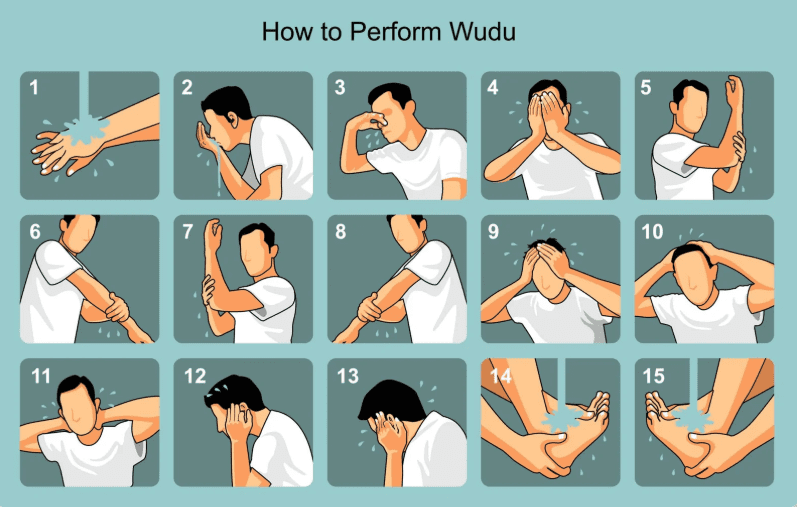
Tahiyatul Wudu is a recommended two-rak‘ah Nafl (optional) prayer performed immediately after completing ablution (wudu). It is offered as a way of honoring the act of purification and seeking spiritual reward. According to the teachings shared by Dawat-e-Islami, this prayer should be performed promptly after wudu to gain maximum blessings and closeness to Allah.
This prayer is based on a famous Hadith in which the Prophet ﷺ mentioned hearing the footsteps of Bilal ibn Rabah (RA) in Paradise. When asked about his special deed, he replied that he would pray two rak‘ahs after every wudu he performed. This shows the great virtue and reward attached to this simple yet powerful act.
What Is Tahiyyatul Wudhu Prayer?
Tahiyyatul Wudhu is a voluntary (nafl) prayer offered after performing wudhu to thank Allah and seek closeness to Him. This prayer highlights the spiritual value of wudhu and turns purification into an act of worship. The practice is supported by authentic hadiths, which show its great virtue and reward, making it a recommended act for Muslims who wish to increase their good deeds.
It is narrated in Muslim that the Prophet ﷺ (peace and blessings of Allah be upon him) said: “Whoever performs ablution and performs it well, and prays two rak’ahs of the Tahiyat al-Wudhu prayer, paying attention to his inner and outer aspects, Paradise becomes obligatory for him.”
Ruling of Performing Tahiyyatul Wudhu in Islam
Tahiyyatul Wudhu is regarded by the majority of scholars as a recommended nafl prayer, not an obligatory one. Its ruling is based on authentic hadith, such as the narration in Sahih al-Bukhari and Sahih Muslim, where the Prophet ﷺ praised Bilal رضي الله عنه for praying two rak‘ahs after every wudhu. From this evidence, scholars agree that it is a virtuous Sunnah practice in meaning, but nafl in legal ruling.
related learning related post
Virtues of Tahiyyatul Wudhu on Hadith Evidence
The immense virtue of Tahiyyatul Wudhu is highlighted through several authentic narrations from the Companions of the Prophet ﷺ:
- Abū Hurayrah (may Allah be pleased with him) narrates that the Prophet ﷺ asked Bilāl (may Allah be pleased with him) at the time of Fajr prayer: “O Bilāl, inform me of the most hopeful act you have done in Islam, for indeed I heard your footsteps in front of me in paradise.”
Bilāl replied:
“I have not carried out any action that provides me hope besides that I do not perform ablution in the day or night without praying with that ablution as much as what has been decreed for me.”
(Ṣaḥīḥ al-Bukhārī, 1149) - ʿUthmān ibn ʿAffān (may Allah be pleased with him) reported: “Whoever performs ablution similar to my ablution and then performs two Rakʿah in which he does not talk to himself or think of worldly matters, Allah forgives all his previous sins.”
(Ṣaḥīḥ al-Bukhārī, 164) - ʿUqbah ibn ʿĀmir (may Allah be pleased with him) narrated: “There is no Muslim who performs ablution well, then stands and prays two Rakʿah with full concentration, except that Paradise becomes necessary for him.”
(Ṣaḥīḥ Muslim, 234) - ʿUthmān ibn ʿAffān (may Allah be pleased with him) also reported: “A Muslim who performs ablution well and then offers Ṣalāh will have all his sins forgiven from that time until the next Ṣalāh.”
(Ṣaḥīḥ Muslim, 227)
Imam Ibn al-Jawzī explains that this practice encourages a believer to perform Salah immediately after ablution, emphasizing the connection between physical purification and worship.
(Kashf al-Mushkil, 3:465; Fatḥ al-Bārī, 3:34)
How to Perform Tahiyyatul Wudhu Prayer and Table
| Step | Action | Detailed Explanation |
| 1 | Perform Wudhu Correctly | Begin by completing wudhu according to Sunnah, ensuring each obligatory and recommended act is fulfilled with care, cleanliness, and presence of heart. |
| 2 | Have Sincere Intention | Make niyyah in the heart to offer Tahiyyatul Wudhu solely for Allah’s pleasure; there is no fixed wording, as intention is an internal act. |
| 3 | Choose a Clean Place | Select a pure and quiet spot for prayer, free from distractions, to help maintain focus and humility during salah. |
| 4 | Face the Qiblah | Stand upright facing the direction of the Ka‘bah, as this is a required condition for performing any prayer. |
| 5 | Begin the Prayer | Start the salah by raising the hands and saying Allahu Akbar, just as in any other nafl prayer. |
| 6 | First Rak‘ah Recitation | Recite Surah al-Fatihah followed by any portion of the Qur’an you know, calmly and with reflection. |
| 7 | Complete Ruku‘ and Sujood | Perform ruku‘ and sujood with tranquility, remembering Allah and observing proper posture in each position. |
| 8 | Second Rak‘ah Recitation | In the second rak‘ah, again recite Surah al-Fatihah and another surah or verses from the Qur’an. |
| 9 | Finish the Prayer | Conclude the prayer by sitting for tashahhud and ending with salam on both sides. |
| 10 | Make Du‘a | After completing the prayer, ask Allah for forgiveness, mercy, and acceptance, as this moment is blessed. |
Number of Rak‘ahs and Timing of Tahiyyatul Wudhu Prayer
Tahiyyatul Wudhu is performed as two rak‘ahs, as proven by authentic hadith where the Prophet ﷺ approved offering two units of prayer after completing wudhu. These rak‘ahs are prayed in the same manner as other voluntary prayers, with the intention of drawing closer to Allah after purification.
Regarding its timing, scholars differ on whether it may be performed during prohibited times, such as after Fajr and after ‘Asr. Many jurists advise delaying it until permissible periods, while others allow it because the prayer is connected to a specific cause (wudhu), reflecting a balanced and well-known difference of opinion in Islamic jurisprudence.
Common Mistakes While Performing Tahiyyatul Wudhu
A common mistake is assuming Tahiyyatul Wudhu is obligatory, whereas it is a voluntary prayer with great reward. Some people delay it for too long after wudhu, even though it is best offered soon after purification. Others neglect proper focus in salah or avoid it entirely due to confusion about prohibited times, despite valid scholarly differences on this issue.
Conclusion
Tahiyyatul Wudhu is a beautiful voluntary prayer that transforms a simple act of purification into a means of worship and closeness to Allah. Supported by authentic hadith, it carries great reward, encourages consistency in cleanliness, and strengthens a believer’s connection with salah. Make it a habit after wudhu whenever possible, and revive this blessed Sunnah practice to earn ongoing rewards and spiritual growth in daily life.
FAQs: Tahiyyatul Wudhu Prayer
1. How to perform Tahiyatul Wudu?
Pray two rak‘ahs after completing wudhu, reciting Surah al-Fatihah and another surah in each rak‘ah, then finish with tashahhud and salam.
2. What is Tahiyyat al-Wudu?
It is a voluntary prayer offered after wudhu to thank Allah and seek reward.
3. Is Tahiyatul Wudu Sunnah or Nafl?
It is Nafl (voluntary) but highly recommended (Sunnah in meaning).
4. How many Rakats are in Tahiyatul Wudu?
Two rak‘ahs.
5. Is it mandatory to pray at the Tahiyatul Masjid?
No, it is recommended but not obligatory.
6. Can kissing break wudu?
Yes, kissing someone with desire breaks wudhu, while innocent pecks do not.
7. How do I pray Tahajjud by myself?
Wake up at night, make wudhu, pray 2 or more rak‘ahs, recite Qur’an, and end with Witr.
8. What are the 4 Farz of Wudu?
Wiping face, both arms up to elbows, wiping head, and both feet up to ankles.
9. How to do tahiyat in prayer?
Sit after two rak‘ahs, recite the tashahhud (“At-Tahiyyat…”), and finish with salams.
10. Is 2 nafl enough for Tahajjud?
Yes, you can pray 2 rak‘ahs as minimum; more rak‘ahs are allowed.
11. Can a shower count as wudu?
A shower does not replace wudhu; you must perform wudhu properly after bathing.
12. Can I pray Tahajjud without Witr?
It is allowed, but Witr is recommended as the last prayer of the night.
13. What makes wudu not count?
Acts like urination, defecation, deep sleep, loss of consciousness, and passing gas nullify wudhu.
14. What are the alternatives to wudu?
If water is unavailable, tayammum (dry ablution with clean soil) can be performed.
15. Can you pray without wudu?
No, prayer without wudhu is not valid.
16. Am I sinful for not praying at the Tahiyatul Masjid?
No, it is recommended, not obligatory, so there is no sin for missing it.
17. What is the intention for Tahiyatul Wudu?
Make the niyyah in your heart: “I intend to pray two rak‘ahs of Tahiyyatul Wudhu for Allah’s pleasure.”
18. Is it compulsory to do wudu before prayer?
Yes, wudhu is mandatory for all obligatory and most voluntary prayers.