
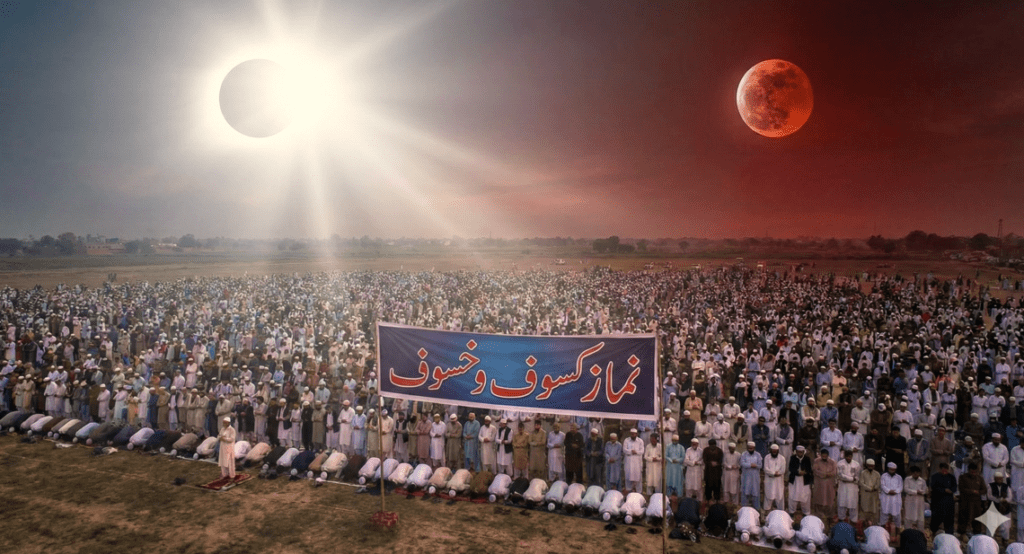
What Is Salatul Kusuf (Solar Eclipse Prayer)?
Salatul Kusuf is a special Sunnah prayer offered during a solar eclipse. It is performed to remember Allah, seek forgiveness, and reflect on His power. This prayer is not linked to fear of death or disaster, but to humility and remembrance of Allah.
Author real activity : We have performed this prayer many times, which is offered during solar and lunar eclipses. We urge you to also perform this prayer during such times.
note: Namaz-e-Kusuf and Namaz-e-Khusuf are performed in the same way.
- Kusuf (كسوف) → Solar eclipse
- Khusuf (خسوف) → Lunar eclipse
- Method: 2 rak‘ahs, each with 2 qiyams, 2 rukū‘, 2 sajdahs, and long Qur’an recitation.
- Can be prayed individually or in congregation, followed by du‘a and istighfar.
The only difference is the type of eclipse; the procedure remains identical.
Meaning of Salatul Kusuf and khusuf
Kusuf Meaning
The word Kusuf means the eclipse of the sun. In Islamic terminology, it refers to the prayer offered when the sun is eclipsed.
Khusuf Meaning
Khusuf (خسوف) means a lunar eclipse, which occurs when the moon is temporarily obscured by the Earth’s shadow.
related post
| Namaz Rakat Guide Table |
| fajr namaz rakat |
| zohar namaz rakat |
| asr namaz rakat |
| maghrib namaz rakat |
| isha namz rakat |
| practicaly method namaz |
| witr namaz |
| sunnat namaz |
| jumma namaz rakat |
Sun and Moon Are Two Signs from Allah
The sun and moon are among the greatest signs of Allah’s power. Their movement follows a precise divine system, reminding believers of Allah’s control over the universe.
Eclipses Are Signs from Allah
An eclipse is a sign from Allah, not a result of someone’s birth or death. It serves as a reminder for humans to turn back to Allah in worship, repentance, and reflection.
Is Salatul Kusuf and khusuf Sunnah?
Yes, Salatul Kusuf is a confirmed Sunnah (Sunnah Mu’akkadah) of Prophet Muhammad ﷺ. He himself offered this prayer and commanded the companions to pray it.
How Was Salatul Kusuf Legislated?
Salat al-Kusuf was legislated during the lifetime of the Prophet ﷺ when a solar eclipse occurred. The Prophet ﷺ gathered the people, led them in prayer, and clarified the true purpose of eclipses.
Divine Wisdom Behind the Occurrence of Eclipses
The wisdom behind eclipses includes:
- Reminding people of Allah’s greatness
- Encouraging repentance and humility
- Turning hearts away from superstitions
- Preparing believers for the Day of Judgment
The Time for Salatul Kusuf
The time for Salat al-Kusuf:
- Begins when the solar eclipse starts
- Ends when the eclipse finishes
If the eclipse ends before prayer, the prayer is no longer required.
Namaz-e-Khasoof Is Offered at the Time of
Namaz-e-Kusoof is offered only during a solar eclipse. It should not be prayed before or after the eclipse time.
Table namaze Kusuf and namaze khusuf and rakat
| Feature | Namaz-e-Kusuf (Solar Eclipse) | Namaz-e-Khusuf (Lunar Eclipse) |
| Type of Eclipse | Solar (Sun) | Lunar (Moon) |
| Rak‘ahs | 2 | 2 |
| Qiyam (Standing) | 2 long qiyams per rak‘ah | 2 long qiyams per rak‘ah |
| Rukū‘ (Bowing) | 2 per rak‘ah | 2 per rak‘ah |
| Sajdah (Prostration) | 2 per rak‘ah | 2 per rak‘ah |
| Recitation | Long Qur’an recitation in each qiyam | Long Qur’an recitation in each qiyam |
| Congregation | Allowed and recommended | Allowed and recommended |
| Dua After Prayer | Yes, Istighfar & supplications | Yes, Istighfar & supplications |
| Purpose | Reminder of Allah’s power, reflection & repentance | Reminder of Allah’s power, reflection & repentance |
| Hadith Reference | Ṣaḥīḥ al-Bukhārī, Ṣaḥīḥ Muslim | Ṣaḥīḥ al-Bukhārī, Ṣaḥīḥ Muslim |
Salatul Kusuf – Complete Step-by-Step Method (Detailed)
- Niyyah (Intention)
Begin by making the intention (niyyah) in your heart that you are offering two rak‘ahs of Salat al-Kusuf solely for the pleasure of Allah. There is no need to say the niyyah aloud; it is sufficient to resolve it in your heart. - Opening Takbīr and First Qiyām
Start the prayer by saying Allāhu Akbar (اللّٰهُ أَكْبَر).
In the first qiyām (standing), recite Sūrah al-Fātiḥah (الفاتحة) followed by a long recitation from the Qur’an. Common choices include longer passages or complete short surahs to reflect upon the greatness of Allah. - First Rukū‘
Go into rukū‘ and say:
سُبْحَانَ رَبِّيَ الْعَظِيمِ
Repeat at least three times. The rukū‘ should be longer than usual, as taught by the Prophet ﷺ. - Second Qiyām in the Same Rak‘ah
Rise from rukū‘ saying:
سَمِعَ اللّٰهُ لِمَنْ حَمِدَهُ
Stand again for the second qiyām, reciting Sūrah al-Fātiḥah and another long portion of the Qur’an. This second recitation is a distinguishing feature of Salat al-Kusuf. - Second Rukū‘
Perform the second rukū‘ and again recite:
سُبْحَانَ رَبِّيَ الْعَظِيمِ
Maintain a calm, reflective posture, as in the first rukū‘. - Two Sajdahs
After the second rukū‘, perform two sajdahs in each rak‘ah, saying in each:
سُبْحَانَ رَبِّيَ الْأَعْلَى
Then sit up briefly between the sajdahs as usual. - Second Rak‘ah
Perform the second rak‘ah exactly like the first:
- Two long qiyāms with Qur’an recitation
- Two rukū‘s
- Two sajdahs
- Two long qiyāms with Qur’an recitation
- Qa‘dah (Tashahhud) and Salām
After completing the second rak‘ah, sit for tashahhud and recite:
التَّحِيَّاتُ لِلّٰهِ وَالصَّلَوَاتُ وَالطَّيِّبَاتُ …
Then send blessings on the Prophet ﷺ using Durood-e-Ibrāhīm. End the prayer by turning the head to the right and left, saying:
السَّلَامُ عَلَيْكُمْ وَرَحْمَةُ اللّٰهِ - Du‘ā and Remembrance After Prayer
After completing Salat al-Kusuf, engage in du‘ā, istighfār, and dhikr, asking Allah for forgiveness, mercy, and guidance. A common du‘ā is:
أَسْتَغْفِرُ اللّٰهَ (I seek Allah’s forgiveness), repeated several times. - Notes on Conduct
- The prayer can be performed individually or in congregation, with congregation preferred.
- The imam may deliver a short khutbah afterward, reminding people to reflect, repent, and do good deeds.
- There is no need to repeat the prayer if the eclipse lasts long; one Salat al-Kusuf is sufficient.
References: Ṣaḥīḥ al-Bukhārī, Ṣaḥīḥ Muslim, and Hadith regarding the Prophet ﷺ’s practice during solar eclipses.
Dua After Salat al-Kusuf / Salat al-Khusuf:

Transliteration:
Allahumma ajirni min kulli sharri wa bala’in, waghfir li dhunoobi, warzuqni at-tawbah wal-‘afwa war-rahmah, warzuqni ma tuhibbu wa tardha.
Meaning (English):
“O Allah, protect me from all evil and calamities, forgive my sins, grant me repentance, pardon, and mercy, and provide me with that which You love and are pleased with.”
Can You Pray Salat al-Kusuf in Congregation?
Yes, Salat al-Kusuf can be prayed in congregation, and this is preferable. It can also be prayed individually if congregation is not possible.
Should the Imam Give Khutbah After Salat al-Kusuf?
Yes, it is recommended for the imam to give a short khutbah after the prayer, reminding people to:
- Fear Allah
- Seek forgiveness
- Give charity
- Increase good deeds
Should You Repeat Salat al-Kusuf If the Eclipse Does Not End?
No, Salat al-Kusuf is not repeated. One prayer is sufficient, even if the eclipse lasts for a long time.
Salatul Kusuf and Khusuf
- Salat al-Kusuf → Solar eclipse prayer
- Salat al-Khusuf → Lunar eclipse prayer
Both prayers are similar in method but differ in the type of eclipse.
Difference Between Kusuf and Khusuf
| Term | Meaning |
| Kusuf | Solar Eclipse |
| Khusuf | Lunar Eclipse |
Salatul Kusuf Benefits
Some key benefits include:
- Strengthens faith and taqwa
- Brings awareness of Allah’s power
- Encourages repentance
- Removes superstitions from the heart
Salatul Kusuf Dua
During and after the prayer, one should make sincere duas such as:
- Asking for forgiveness
- Protection from punishment
- Mercy for oneself and the Ummah
Author request: I wrote this post with great effort, but if you notice any mistakes or errors, please point them out so I can correct them.
Conclusion
Salatul Kusuf is a powerful Sunnah prayer that connects the believer to Allah during extraordinary natural events. It teaches humility, reflection, and true belief in Allah’s signs.
Call to Action:
Whenever a solar eclipse occurs, remember this Sunnah and revive the practice of Salat al-Kusuf with sincerity and knowledge.
FAQs Salatul Kusuf and Salatul Khusuf
How to perform Salatul Kusuf and Khusuf?
Pray 2 rak‘ahs, each with 2 long qiyams, 2 rukū‘s, 2 sajdahs, recite Qur’an aloud, and end with du‘a and istighfar.
What is Namaz-e-Kusuf?
It is a Sunnah prayer offered during a solar eclipse.
Why is Namaz-e-Kusuf and Namaz-e-Khusuf offered?
To remember Allah, seek forgiveness, and reflect on His power; they are signs from Allah.
Is Salatul Kusuf mandatory?
No, it is a Sunnah Mu’akkadah (highly recommended but not obligatory).
How to pray Namaz-e-Kusuf?
Follow the 2 rak‘ah method with long qiyams, rukū‘s, and sajdahs, reciting Qur’an aloud and ending with du‘a.
How many rakats is Salatul Kusuf?
2 rak‘ahs.
How to perform Khusuf?
Exactly like Salat al-Kusuf, but during a lunar eclipse.
What time to pray Salatul Kusuf?
During the solar eclipse, from the start to the end of the eclipse.
Can you pray Salat al-Kusuf by yourself?
Yes, it can be offered individually or in congregation, though congregation is preferred.
Is Salatul Kusuf a Sunnah or Nafl?
It is a Sunnah Mu’akkadah.