
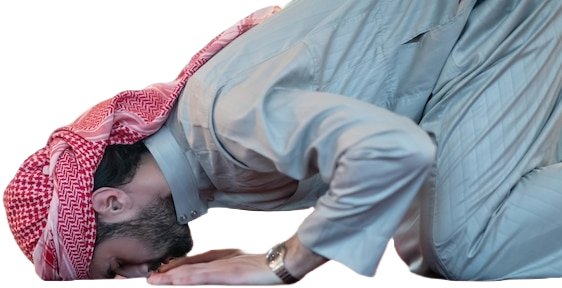
Prostration (Sujood) is one of the obligatory acts of prayer. This means that performing sajdah in namaz is compulsory. For any prayer to be valid, sujood must be performed within the prayer. If sujood is not performed, the namaz is not valid. You will find complete and detailed information about prostration in this post, so be sure to read the article until the end.
What Is Prostration?
Prostration means bowing down with the forehead touching the ground as an act of worship. In Islamic prayer, this act is called Sujood (سجود).
It is a physical posture combined with spiritual submission, where a believer acknowledges Allah’s greatness and their own humility.
How to Perform Prostration Sajdah in Namaz – Step by Step
Prostration (Sujood) is one of the most essential and sacred actions in Salah. It is a pillar of prayer, and without it, the prayer is not valid. Performing sujood correctly, calmly, and with humility not only fulfills the obligation of prayer but also greatly enhances its spiritual value. Below is the correct and detailed method of performing Sajdah in Namaz, according to authentic Islamic teachings.
Step 1: Saying Allahu Akbar
To begin prostration, say “Allahu Akbar” while moving down from the standing position or from ruku (bowing). This takbeer signifies leaving one position of worship and entering another, reminding the worshipper that Allah is greater than everything else.
Step 2: Going Down for Sujood Properly
While going down for sujood, place your body gently and respectfully on the ground. According to authentic narrations, both methods are permissible:
- Placing the hands on the ground before the knees, or
- Placing the knees on the ground before the hands
Either method is valid, and a person may follow the practice they are comfortable with, according to their school of thought.
Step 3: Placing the Forehead and Nose on the Ground
Once on the ground, place your forehead firmly on the ground, ensuring that the nose also touches the ground. The forehead is the most honorable part of the body, and placing it on the ground is a sign of complete humility and submission before Allah.
Step 4: Position of the Hands and Elbows
Place both palms flat on the ground, beside the shoulders or ears, with the fingers facing the Qiblah. Keep the elbows raised and away from the floor. Resting the elbows on the ground like an animal is discouraged, as the Prophet Muhammad ﷺ instructed believers to maintain dignity and balance in sujood.
Step 5: Position of the Legs and Toes
Both knees should be on the ground, and the toes of both feet should be bent and facing the Qiblah. This posture completes the requirement of placing the seven body parts on the ground during prostration.
Step 6: Maintaining Calmness and Humility
Remain in sujood with calmness (tuma’ninah) and humility. Avoid rushing through this position. This is the moment when a servant is closest to Allah, so it should be performed with full concentration, sincerity, and presence of heart.
Step 7: Recitation in Sujood
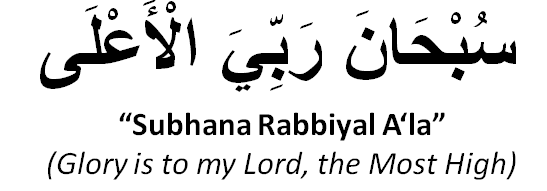
While in sujood, recite the following at least three times:
namaz related post:
| Namaz Rakat Guide Table |
| fajr namaz rakat |
| zohar namaz rakat |
| asr namaz rakat |
| maghrib namaz rakat |
| isha namz rakat |
| practicaly method namaz |
| witr namaz |
| sunnat namaz |
| jumma namaz rakat |
Importance of Prostration And Sajdah in Namaz Islam
Prostration holds a very high status in Islam. It is the moment when a servant is closest to Allah.
The Prophet Muhammad ﷺ said:
“The closest a servant is to his Lord is when he is in prostration.”
(Sahih Muslim)
This Hadith clearly shows that sujood is not merely a physical movement, but a powerful spiritual connection between the believer and Allah.
Body Parts Used in Prostration And Sajdah in Namaz
According to authentic Hadith, seven body parts must touch the ground during prostration:
- Forehead (including the nose)
- Both palms
- Both knees
- Toes of both feet (facing the Qiblah)
These seven points symbolize the complete submission of the body to Allah, making sujood the ultimate expression of humility.
Spiritual Benefits of Prostration And Sajdah in Namaz
Sujood brings countless spiritual rewards, including:
- Increases humility
- Strengthens faith (Iman)
- Brings inner peace and tranquility
- Helps erase sins
- Raises a believer’s rank in the Hereafter
Each prostration is a moment of direct communication with Allah, making it one of the most powerful acts of worship.
Physical and Health Benefits of Prostration And Sajdah in Namaz
Modern research also highlights the physical benefits of prostration:
- Improves blood circulation to the brain
- Reduces stress and anxiety
- Strengthens joints and muscles
- Helps maintain flexibility and posture
Islamic worship perfectly combines spiritual purification with physical well-being.
Types of Prostration And Sajdah in Namaz Islam
In Islam, prostration (Sujood) is performed in different situations, each carrying its own spiritual importance. These forms of sujood reflect obedience, humility, and gratitude toward Allah.
1. Prostration in Salah
This is the regular sujood performed during the five daily prayers. It is an essential pillar of Salah, and without it, the prayer is not valid.
2. Prostration of Forgetfulness (Sujood Sahw)
Sujood Sahw is performed when a mistake or forgetfulness occurs during prayer. It helps correct minor errors and completes the Salah properly.
3. Prostration of Recitation (Sujood Tilawah)
Sujood Tilawah is performed when certain verses of the Quran are recited or heard. It shows submission and respect to the words of Allah.
4. Prostration of Gratitude (Sujood Shukr)
Sujood Shukr is performed to express gratitude to Allah upon receiving blessings or good news. It reflects thankfulness and acknowledgment of Allah’s mercy.
Each type of prostration deepens a believer’s faith and strengthens their connection with Allah.
Common Mistakes During Prostration And Sajdah in Namaz
Many people unknowingly make mistakes in sujood, such as:
- Forehead not touching the ground properly
- Elbows resting on the floor
- Feet lifted off the ground
- Rushing through prostration without calmness
Correcting these errors improves the quality, acceptance, and reward of prayer.
Prostration in Other Religions
Prostration is not unique to Islam. It was practiced in earlier traditions as well:
- Angels prostrated to Adam by Allah’s command
- Prophets of previous nations performed prostration
- It symbolized humility before God in many religions
However, Islam preserved prostration in its purest form—only for Allah alone.
Why Prostration Is the Peak of Worship
Among all prayer positions—standing, bowing, and sitting—prostration is the highest act of worship because:
- The highest part of the body touches the lowest place
- Ego and pride are broken
- The servant fully submits to Allah
This is why making du‘a (supplication) during sujood is highly recommended.
Author Note:This article has been written with the intention of providing clear, authentic, and easy-to-understand knowledge about Sujood (Prostration) in Namaz. The information presented is based on the Qur’an, authentic Hadith, and classical Islamic jurisprudence, with care taken to maintain accuracy and respect for scholarly opinions. Our goal is to help readers improve their prayer by understanding both the spiritual meaning and the correct method of worship. Any good in this work is from Allah alone, and any mistake is from human limitation. May Allah accept this effort and make it beneficial for all who seek to perfect their Salah.
Conclusion
Prostration (Sujood) is the heart of Islamic prayer and the strongest expression of humility before Allah. It connects the believer directly with the Creator, purifies the soul, and strengthens faith.
By performing sujood correctly—with understanding, sincerity, and devotion—a Muslim can experience true closeness to Allah in this world and eternal success in the Hereafter.
FAQs: Everything You Need to Know About Prostration And Sajdah in Namaz
1. What is Sajdah (Prostration)?
Sajdah is a fundamental pillar of Namaz where a believer places their forehead on the ground in total humility before Allah. It is performed in every Rak’ah and is considered the ultimate way to gain closeness to the Creator.
2. Is Sajdah compulsory in Namaz?
Yes, Sajdah is one of the Faraiz (obligatory acts) of Namaz. If a person intentionally skips a Sajdah, or forgets it and does not perform the compensatory prostration (Sajdah Sahw), the prayer becomes invalid (Batil).
3. How many Sajdahs are performed in one Rak‘ah?
There are two (2) Sajdahs in every Rak‘ah. Between the two prostrations, there is a short sitting pause known as Jalsa.
4. What is recited during Sajdah?
According to the Sunnah, one should recite the following at least three times:
“Subhana Rabbiyal A’la” (Glory be to my Lord, the Most High). It can also be recited 5 or 7 times (or any odd number).
5. Which 7 body parts must touch the ground during Sajdah?
For the Sajdah to be valid, these seven parts must make contact with the ground:
- The Forehead and the bone of the Nose.
- Both Palms.
- Both Knees.
- The Toes of both feet.
6. What are the rules for toes during Sajdah?
According to Hanafi Fiqh, it is mandatory (Farz) for at least one toe of each foot to press against the ground. If both feet remain completely off the ground during the entire Sajdah, the prayer is invalid. It is Sunnah to have all ten toes facing the Qibla.
7. Can we make Dua (supplications) during Sajdah?
- In Obligatory (Farz) Prayers: One should stick to the Sunnah tasbeeh (Subhana Rabbiyal A’la).
- In Voluntary (Nafl) Prayers: You may recite Duas found in the Quran and Hadith in Arabic. Reciting Duas in any other language (English, Urdu, etc.) inside the prayer will invalidate the Namaz.
8. What should I do if I forget a Sajdah?
If you forget a Sajdah and remember it before starting the next Rak’ah, perform it immediately and do Sajdah Sahw at the end. If you realize a Sajdah was missed after the entire Namaz is finished, the prayer must be repeated.
9. What is the difference between “Sajdah” and “Prostration”?
There is no difference in meaning. “Sajdah” is the Arabic term used in Islamic theology, while “Prostration” is the English translation. In Islam, this act is performed exclusively for Allah.
10. When is Sajdah-e-Sahw performed?
Sajdah-e-Sahw is performed at the end of the prayer if a Wajib (necessary) act was missed forgetfully. It consists of two extra prostrations to compensate for the mistake.
11. What is the spiritual significance of Prostration?
Prostration represents ultimate submission. It is the position where the ego is lowered as the most noble part of the body (the forehead) touches the ground. The Prophet ﷺ said, “The nearest a servant comes to his Lord is when he is in prostration.”
12. Can we prostrate on a soft surface like a thick carpet?
Yes, it is valid as long as the forehead can feel the firmness of the ground. If the surface is so soft that the forehead just sinks in without feeling any resistance, the Sajdah may not be valid.
13. Is prostration allowed for anyone other than Allah?
No. In Islam, Sajdah is strictly for Allah alone. Prostrating to any human, grave, or idol is Haraam (forbidden) and is considered a major sin (Shirk).
14. What are the rules for women during prostration?
According to the Hanafi school, a woman’s prostration is more compressed:
- Women: Should keep limbs close together, stomach touching the thighs, and elbows resting on the ground.
- Men: Should keep arms away from their sides and elbows off the ground.
15. What is “Sajdah Tilawat” (Prostration of Recitation)?
This is a mandatory (Wajib) prostration performed when one reads or hears a specific verse in the Quran (Ayat-e-Sajdah) that commands prostration. There are 14 such verses in the Quran.
16. Why is the English term “prostration” used?
It is the most accurate word to describe the physical act of bowing down until the forehead touches the floor. In a religious context, it defines the specific posture of Islamic worship.
17. Can I perform Sajdah if I have a medical condition?
Yes. Islam provides ease; if you cannot place your forehead on the ground due to illness or injury, you may perform Sajdah by leaning forward while sitting on a chair. This is called Isharah (gesturing).
18. What is “Sajdah Shukr” (Prostration of Gratitude)?
This is a voluntary prostration performed outside of Namaz to thank Allah for a blessing or good news. It is a beautiful Sunnah of the Prophet ﷺ.