
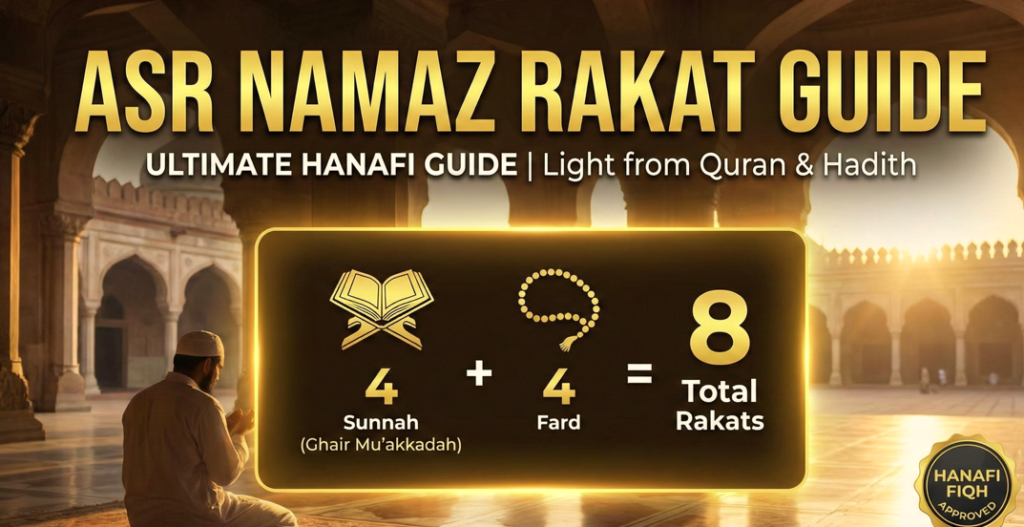
Asr namaz rakat consists of 4 obligatory (Fard) rakats, which are required for every adult Muslim and must be performed in the late afternoon before sunset. These four units are the core and essential part of the prayer.
In addition, there are 4 optional (Sunnah Ghair Mu’akkadah) rakats that may be offered before the Fard. Performing them brings extra reward, but leaving them does not result in sin.
This means Asr can total 8 rakats (4 Sunnah + 4 Fard) if the optional units are prayed, though the minimum required is 4 Fard rakats. There are no Sunnah rakats after the Fard of Asr. Each of the four obligatory units includes Qiyam (standing), Ruku (bowing), and two Sujood (prostrations), completed in proper order with silent recitation.
Asr namaz rakat – Complete Method (Hanafi)
🔹 Intention (Niyyah)
Make the intention in your heart:
‘’I intend to perform the obligatory four rak’ahs of the Asr prayer for the sake of Allah Almighty, with my face towards the Kaaba, following this Imam. Allahu Akbar.’’
Note: This is the method described for performing the obligatory Asr prayer.
(Saying it out loud is not necessary.)
Note: Pay close attention to the correct pronunciation of the letters, otherwise, if the letters are not pronounced correctly, the prayer may become invalid.
🟢 First Rakat
- Say Takbeer-e-Tahreema – Allahu Akbar
اللّٰهُ أَكْبَرُ
- Recite Thana (Subhanaka Allahumma…)
سُبْحَانَكَ اللّٰهُمَّ وَبِحَمْدِكَ
وَتَبَارَكَ اسْمُكَ
وَتَعَالٰى جَدُّكَ
وَلَا إِلٰهَ غَيْرُكَ
- Recite Ta’awwudh and Tasmiyah
أَعُوذُ بِاللّٰهِ مِنَ الشَّيْطَانِ الرَّجِيمِ | بِسْمِ اللّٰهِ الرَّحْمٰنِ الرَّحِيمِ
- Recite Surah Al-Fatiha
- Recite any Surah –
الْحَمْدُ لِلّٰهِ رَبِّ الْعَالَمِينَ
الرَّحْمٰنِ الرَّحِيمِ
مَالِكِ يَوْمِ الدِّينِ
إِيَّاكَ نَعْبُدُ وَإِيَّاكَ نَسْتَعِينُ
اهْدِنَا الصِّرَاطَ الْمُسْتَقِيمَ
صِرَاطَ الَّذِينَ أَنْعَمْتَ عَلَيْهِمْ
غَيْرِ الْمَغْضُوبِ عَلَيْهِمْ وَلَا الضَّالِّينَ
أَلَمْ تَرَ كَيْفَ فَعَلَ رَبُّكَ بِأَصْحَابِ الْفِيلِ
أَلَمْ يَجْعَلْ كَيْدَهُمْ فِي تَضْلِيلٍ
وَأَرْسَلَ عَلَيْهِمْ طَيْرًا أَبَابِيلَ
تَرْمِيهِمْ بِحِجَارَةٍ مِنْ سِجِّيلٍ
فَجَعَلَهُمْ كَعَصْفٍ مَأْكُولٍ
- Go into Ruku
سُبْحَانَ رَبِّيَ الْعَظِيمِ
- Perform two Sujood
سُبْحَانَ رَبِّيَ الْأَعْلَى
🟢 Second Rakat
For the second rak’ah, recite this while standing:
- Recite Surah Al-Fatiha
الْحَمْدُ لِلّٰهِ رَبِّ الْعَالَمِينَ-عَلَيْهِمْ وَلَا الضَّالِّينَ
- Recite any Surah
قُلْ هُوَ اللّٰهُ أَحَدٌ-كُفُوًا أَحَدٌ
- Go into Ruku
سُبْحَانَ رَبِّيَ الْعَظِيمِ
- Perform two Sujood
سُبْحَانَ رَبِّيَ الْأَعْلَى
- Sit for Qa’dah Ula and recite Tashahhud (At-Tahiyyat) only
التَّحِيَّاتُ لِلّٰهِ وَالصَّلَوَاتُ وَالطَّيِّبَاتُ
السَّلَامُ عَلَيْكَ أَيُّهَا النَّبِيُّ وَرَحْمَةُ اللّٰهِ وَبَرَكَاتُهُ
السَّلَامُ عَلَيْنَا وَعَلَىٰ عِبَادِ اللّٰهِ الصَّالِحِينَ
أَشْهَدُ أَنْ لَا إِلٰهَ إِلَّا اللّٰهُ
وَأَشْهَدُ أَنَّ مُحَمَّدًا عَبْدُهُ وَرَسُولُهُ
🟡 Third Rakat-For the third rak’ah, recite this while standing:
- Stand up for the third rakat
- Recite Surah Al-Fatiha only (no additional Surah)
الْحَمْدُ لِلّٰهِ رَبِّ الْعَالَمِينَ-عَلَيْهِمْ وَلَا الضَّالِّينَ
- Go into Ruku
سُبْحَانَ رَبِّيَ الْعَظِيمِ
- Perform two Sujood
سُبْحَانَ رَبِّيَ الْأَعْلَى
Note:
In the third and fourth rak’ahs of the obligatory prayer, only Surah Fatiha is to be recited while standing (qiyam) – according to the Hanafi school of thought.
🟡 Fourth Rakat
- Recite Surah Al-Fatiha only
الْحَمْدُ لِلّٰهِ رَبِّ الْعَالَمِينَ-عَلَيْهِمْ وَلَا الضَّالِّينَ
- Go into Ruku
سُبْحَانَ رَبِّيَ الْعَظِيمِ
- Perform two Sujood
سُبْحَانَ رَبِّيَ الْأَعْلَى
- Sit for Qa’dah Akhirah and recite:
Tashahhud
التَّحِيَّاتُ لِلّٰهِ وَالصَّلَوَاتُ وَالطَّيِّبَاتُ
السَّلَامُ عَلَيْكَ أَيُّهَا النَّبِيُّ وَرَحْمَةُ اللّٰهِ وَبَرَكَاتُهُ
السَّلَامُ عَلَيْنَا وَعَلَىٰ عِبَادِ اللّٰهِ الصَّالِحِينَ
أَشْهَدُ أَنْ لَا إِلٰهَ إِلَّا اللّٰهُ
وَأَشْهَدُ أَنَّ مُحَمَّدًا عَبْدُهُ وَرَسُولُهُ
Durood-e-Ibrahim
اللَّهُمَّ صَلِّ عَلَىٰ مُحَمَّدٍ وَعَلَىٰ آلِ مُحَمَّدٍ
كَمَا صَلَّيْتَ عَلَىٰ إِبْرَاهِيمَ وَعَلَىٰ آلِ إِبْرَاهِيمَ
إِنَّكَ حَمِيدٌ مَجِيدٌ
اللَّهُمَّ بَارِكْ عَلَىٰ مُحَمَّدٍ وَعَلَىٰ آلِ مُحَمَّدٍ
كَمَا بَارَكْتَ عَلَىٰ إِبْرَاهِيمَ وَعَلَىٰ آلِ إِبْرَاهِيمَ
إِنَّكَ حَمِيدٌ مَجِيدٌ
- Any Masnoon Dua
رَبَّنَا آتِنَا فِي الدُّنْيَا حَسَنَةً
وَفِي الْآخِرَةِ حَسَنَةً
وَقِنَا عَذَابَ النَّارِ
- End the prayer by turning the head right and left, saying Salam soldier twin side
السَّلَامُ عَلَيْكُمْ وَرَحْمَةُ اللّٰهِ
Note:
In the third and fourth rak’ahs of the obligatory prayer, only Surah Fatiha is to be recited while standing (qiyam) – according to the Hanafi school of thought.
⚠️ Important Hanafi Rules
- In Farz prayers, an additional Surah is recited only in the first two rakats
- In the last two rakats, only Surah Al-Fatiha is recited
- No Sunnah or Nafl prayer is offered after Asr
namaz related post
| fajr namaz rakat |
| zohar namaz rakat |
| jumma namaz rakat |
| maghrib namaz rakat |
| isha namz rakat |
| practicaly method namaz |
| witr namaz |
| sunnat namaz |
Spiritual Benefits of Praying Asr
Praying Asr is not merely a daily obligation; it is a powerful source of spiritual strength and protection for a believer. Allah highlights the importance of guarding namaz, especially Asr, in the Qur’an:
“Guard strictly your prayers, especially the middle prayer (Asr), and stand before Allah with devotion.”
(Surah Al-Baqarah 2:238)
Strengthening Faith
Regularly observing Asr strengthens a Muslim’s iman (faith) and renews their connection with Allah during a busy part of the day. It reminds believers that worldly tasks should never distract them from their ultimate purpose—worship.
Focus and Inner Clarity
Asr prayer provides a spiritual pause, allowing Muslims to reflect and regain focus. This moment of remembrance brings peace to the heart, as Allah says:
“Verily, in the remembrance of Allah do hearts find rest.”
(Surah Ar-Ra‘d 13:28)
Protection from Neglect
The Prophet ﷺ warned about missing Asr, saying:
“Whoever misses the Asr prayer, it is as if he has lost his family and wealth.”
(Sahih Bukhari)
This shows how Asr protects believers from spiritual loss and negligence.
Patience and Discipline
Praying Asr builds patience, discipline, and consistency, training Muslims to turn toward Allah even during demanding moments of daily life.
Final Thoughts-Asr Namaz Rakat
The Asr Namaz rakat holds a significant place in the daily life of a Muslim, serving as an essential reminder to pause amidst worldly responsibilities and reconnect with Allah. The four Fard rakats of Asr are obligatory and form the core of this prayer, while the additional Sunnah rakats provide an opportunity to earn extra reward and deepen one’s spiritual connection.
Performing Asr prayer on time instills discipline, mindfulness, and consistency, helping believers remain focused on their faith even during the busiest hours of the day. It reinforces the importance of prioritizing worship over daily distractions and strengthens a Muslim’s relationship with Allah.
For Muslims living in world, managing prayer times alongside work, education, and other commitments can sometimes be challenging. However, the immense spiritual rewards and protection associated with praying Asr on time make every effort worthwhile. By observing the proper structure of Asr Namaz Rakat with sincerity and devotion, believers can maintain spiritual balance and remain steadfast in their faith throughout the day.
May Allah grant us the consistency to perform Asr regularly, the strength to prioritize our prayers, and the sincerity to seek closeness to Him in every aspect of our lives. Ameen.
FAQs-ASR Namaz Rakat
How many rakats are there in Asr?
➡️ 8 rakats total (4 Sunnah + 4 Farz)
Is the Asr prayer 4 Rakat?
➡️ Yes, Asr has 4 Farz rakats (which are compulsory)
How to pray Asr Namaz Rakat?
➡️ First 4 Sunnah (optional), then 4 Farz (obligatory)
Is Asr 4 Rakat Sunnah or Farz?
➡️ 4 Rakat Farz (Sunnah are extra)
Is Asr 3 or 4 rakat?
➡️ 4 Rakat Farz, not 3
Is Asr 8 rakats?
➡️ Yes, including Sunnah (4 Sunnah + 4 Farz)
How many rakats are in Asr today?
➡️ Same every day: 4 Farz (plus optional Sunnah)
What is Asr 1 and Asr 2?
➡️ These are two different opinions about Asr prayer time, not rakats
Is Taraweeh 8 or 20?
➡️ Both are practiced; 20 is common in Hanafi fiqh
Is it haram to pray Asr?
➡️ No, Asr prayer is Farz (obligatory)
How much is Asr?
➡️ 4 Farz rakats (minimum required)
How to pray Asr together?
➡️ Pray in congregation (Jamaat) behind an Imam
How many rakats are in Asr?
➡️ 4 Farz, 8 total including Sunnah
How many Sunnah rakats for Asr?
➡️ 4 Sunnah (Ghair Muakkadah)
How do I pray Asr?
➡️ Pray 4 Farz rakats silently after Asr time begins
How many rakats is Al-Asr?
➡️ 4 Farz rakats
Is Asr Namaz silent?
➡️ Yes, Asr is prayed silently
Why is it called Asr?
➡️ Because it is prayed in the afternoon time