
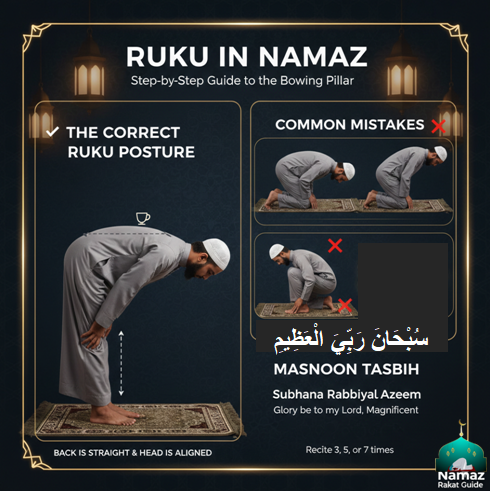
In the journey of Salah, after standing and reciting the Word of Allah, we transition into a position of physical humility known as Ruku in Namaz. This bowing posture is a fundamental pillar of prayer that symbolizes our submission to the Almighty.
What is Ruku in Namaz? Meaning and Definition
Ruku is an Arabic word that literally means “to bow down” or “to bend.” In Islamic Jurisprudence (Fiqh), it refers to the specific act of bending forward at the waist during prayer, placing the hands on the knees, and praising Allah.
Is Ruku Farz in Salah? Evidence from Quran and Hadith
Yes, Ruku is one of the Arkan-e-Namaz (Obligatory Pillars). Without performing Ruku, the prayer is invalid.
- Quran: Allah says, “O you who have believed, bow (irka’u) and prostrate and worship your Lord…” (Surah Al-Hajj, 22:77).
- Hadith: The Prophet (PBUH) told a man who prayed incorrectly, “Then bow until you are at ease in Ruku.” (Sahih Bukhari).
The Proper Way to Perform Ruku (Step-by-Step Guide)
To perform Ruku correctly:
- Transition: Say “Allahu Akbar” while moving from the standing position.
- The Bend: Bend your back forward until it is horizontal (level).
- The Hands: Grasp your knees firmly with your fingers spread apart (for men).
- The Look: Keep your eyes fixed on the spot between your feet or the place of prostration.
namaz related post:
Ruku Position for Women – How Is It Different?
In the Hanafi school, there are slight differences for women to maintain modesty:
- Women should bend only slightly (just enough to touch the knees).
- They should keep their fingers together on the knees rather than spread.
- The elbows should stay close to the sides of the body.
What to Recite in Ruku? Masnoon Tasbih and Its Meaning
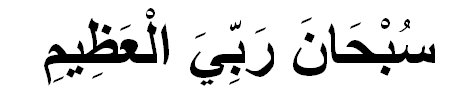
While in Ruku, the Sunnah is to recite the following at least three times (or any odd number like 5 or 7):
Subhana Rabbiyal Azeem (Glory be to my Lord, the Magnificent)
The Importance of “Tuma’neenah” (Stillness) in Ruku
One of the most common mistakes is “pecking” like a bird—moving too fast. Tuma’neenah means staying still in the Ruku position for at least the duration of one “SubhanAllah.” Rushing through Ruku can invalidate the prayer according to many scholars.
Correct Hand and Finger Positioning on the Knees
For men, the Sunnah is to grasp the knees firmly with the fingers spread wide, as if “clutching” them. The arms should be kept straight and away from the ribs. This provides the support needed to keep the back flat.
Common Mistakes in Ruku and How to Avoid Them
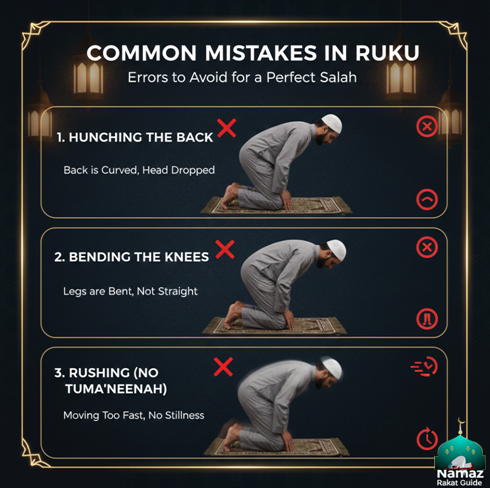
- Hunching the Back: The back should be a flat surface, not curved.
- Dropping the Head: Your head should be in line with your back, not hanging down or looking up.
- Bending the Knees: Keep your legs straight; do not let the knees buckle.
Rules for People Who Cannot Bend (Ruku on a Chair)
If you have a back injury or old age prevents you from bending, you can perform Ruku by leaning forward slightly while sitting on a chair. The “Ruku” gesture should be a distinct lean, though not as deep as the gesture used for Sajdah.
What Happens If You Forget Ruku? Rules of Sajdah Sahw
If you accidentally skip Ruku and move straight to Sajdah:
- If you realize it while still in prayer, you must return to the standing position, perform Ruku, and continue.
- Because a pillar was delayed, you must perform Sajdah Sahw (two extra prostrations) at the end of the prayer.
Difference Between Ruku in Fard, Sunnah, and Nafl Prayers
The physical act of Ruku remains identical across all types of prayers. Whether it is a mandatory Farz prayer or a voluntary Nafl, the requirement for a flat back and the recitation of Tasbih remains the same.
Spiritual Benefits of Bowing Before Allah
Ruku is a physical manifestation of “Takabbur” (pride) leaving the heart. By bending our backs, we acknowledge that only Allah is Great (Azeem) and we are His humble servants. It is a moment of deep peace and recognition of our Creator’s power.
Ruku in Congregational Prayer – Following the Imam Correctly
When praying in a group, you must wait for the Imam to finish saying “Allahu Akbar” before you start your move into Ruku. You should stay in Ruku as long as the Imam does, and only rise when he says, “Sami Allahu liman hamidah.”
Author Note:As the creator of the Namaz Rakat Guide, I have seen many people struggle with the physical postures of Salah. Ruku is often the most rushed part of prayer. I encourage you to take an extra two seconds in your next prayer to ensure your back is flat and your mind is focused on the word “Azeem” (The Magnificent). Correcting your posture is a simple way to increase the reward of your worship.
Conclusion
In summary, Ruku is much more than a physical movement; it is a profound act of submission that bridges our recitation with our prostration. By perfecting your posture—keeping a flat back and a steady heart—you fulfill a vital pillar of Salah and demonstrate true humility before your Creator. Taking those few extra seconds to find stillness (Tuma’neenah) in your bow can transform your prayer from a daily routine into a deeply spiritual experience.
FAQs Ruku In Namaz
Q1. Is it mandatory to keep the back perfectly flat during Ruku?
Answer: Yes, for men, the Sunnah is to keep the back so level that if a cup of water were placed on it, it would not spill. While the “Farz” is simply to bend enough for the hands to reach the knees, a flat back is essential for the perfection of the prayer.
Q2. What is the minimum time one must stay in the Ruku position?
Answer: You must stay in Ruku long enough to achieve Tuma’neenah (stillness). This is generally the time it takes to say “SubhanAllah” once clearly. Rushing out of Ruku before the body becomes still can invalidate the prayer.
Q3. What should I do if I forget to say the Tasbih in Ruku?
Answer: Reciting “Subhana Rabbiyal Azeem” is a Sunnah (and Wajib in some schools). If you forget it but performed the bow (Ruku) itself, your prayer is still valid. However, you should try to be more mindful in the future.
Q4. Can women bend as deeply as men in Ruku?
Answer: According to the Hanafi school, women should only bend slightly—just enough for their hands to reach their knees. They should keep their back curved slightly rather than flat and keep their elbows tucked in to maintain modesty.
Q5. Is it allowed to look around or look at your feet during Ruku?
Answer: The Sunnah is to keep your gaze fixed on the space between your feet or the area of prostration. Looking around or turning the head is Makruh (disliked) as it takes away from the focus (Khushu) of the prayer.
Q6. What happens if I miss Ruku and go straight to Sajdah?
Answer: Ruku is a Pillar (Rukn). If you miss it, you must go back, stand up, perform the Ruku, and then continue your prayer. Because you changed the order, you must perform Sajdah Sahw at the end.
Q7. Should fingers be spread or kept together on the knees?
Answer: Men should spread their fingers wide to grasp the knees firmly. Women should keep their fingers together and simply rest them on the knees without grasping them.
Q8. Can I pray on a chair if I cannot perform Ruku?
Answer: Yes. If a medical condition prevents you from bending, you can sit on a chair and lean your upper body forward to signify the Ruku. Ensure your Ruku lean is distinct from your Sajdah lean.
Q9. Is it Sunnah to recite “Subhana Rabbiyal Azeem” an even or odd number of times?
Answer: It is Sunnah to recite it an odd number of times, such as 3, 5, or 7. Three times is the standard practice for most congregational prayers.
Q10. Do I have to raise my hands (Raf-al-Yadayn) before going into Ruku?
Answer: This is a point of difference among schools. In the Shafi’i and Hanbali schools, it is Sunnah to raise hands. In the Hanafi school, hands are only raised at the start of the prayer (Takbeer-e-Tahrima). Both methods are based on authentic traditions.