
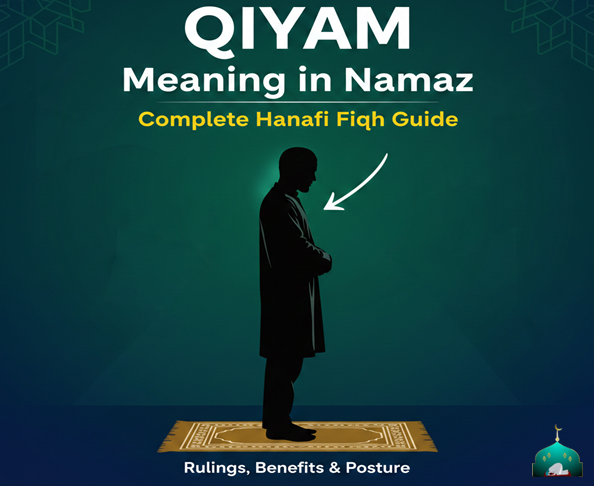
In Hanafi Fiqh, Qiyam (standing) is a mandatory pillar (Rukn) of Farz and Wajib prayers, symbolizing a servant’s ultimate devotion to Allah. Beyond being a physical posture, it is a spiritual state of standing in the Divine Presence. This guide outlines the essential rulings, method, and significance of Qiyam to help you perfect this vital part of your Salah.
What Is Qiyam Meaning in Namaz
In Islamic terminology, Qiyam refers to the act of standing during Salah (prayer). It is one of the fundamental pillars (Arkan) of the prayer. It represents a state of total devotion where a believer stands upright before Allah to recite His words and offer praise.
Qiyam Meaning in English, Arabic, and Urdu/Hindi
- English: Standing.
- Arabic: قیام (Derived from the root word qama, meaning to rise or stand).
- Urdu/Hindi: قیام / खड़ा होना (Khara hona).
Literal and Linguistic Meaning of Qiyam
Linguistically, Qiyam means to be upright, to rise, or to stay standing rather than sitting or lying down. In the context of Sharia, it specifically refers to the standing posture in prayer for the duration required to complete the mandatory recitation (Qirat).
Qiyam in Salah – Concept and Explanation
In Hanafi Fiqh, Qiyam is defined as a posture where the person is standing so straight that if they were to extend their hands, they would not be able to touch their knees. It is the phase of the prayer dedicated to the recitation of the Quran (Surah Al-Fatiha and an additional Surah).
Namaz-related post:
Why Is Qiyam Important? Benefits and Significance in Prayer
Qiyam holds immense spiritual and physical significance:
- Spiritual Submission: It symbolizes the servant’s readiness to obey Allah’s commands.
- Mental Focus: Standing upright helps in maintaining concentration and prevents the lethargy that can come with sitting.
- Discipline: It trains the soul to remain steadfast and patient in the presence of the Creator.
Is Qiyam Farz in Namaz? Obligation and Islamic Rulings
According to the Hanafi School of Thought:
- In Mandatory (Farz) and Wajib Prayers: Qiyam is Farz (obligatory). If a person prays sitting down without a valid Shari’i excuse (like severe illness or inability to stand), their prayer will be invalid.
- In Sunnat and Nafl Prayers: Qiyam is not Farz. One can pray sitting down even without an excuse, though the reward is halved compared to praying while standing.
How to Perform Qiyam in Salah (Step-by-Step Guide)
- Stance: Stand straight with feet pointing toward the Qibla.
- Gap: Keep a gap of approximately four fingers’ width between the feet.
- Hand Placement (Hanafi Method): Men place their right hand over the left below the navel. Women place their hands on their chest.
- Gaze: Keep your eyes fixed on the spot where your forehead touches the ground during Sajdah (prostration).
Qiyam in the Quran – Relevant Verses and Meanings
The Quran emphasizes the importance of standing in prayer:
“And stand before Allah with devout obedience.” (Surah Al-Baqarah, 2:238)
Hadith About Qiyam in Prayer
The Prophet Muhammad (PBUH) said:
“Pray standing; if you cannot, then sitting; and if you cannot, then lying on your side.” (Sahih Bukhari) This Hadith establishes that standing is the primary requirement unless there is a physical disability.
Position and Posture of Qiyam in Namaz
In the Hanafi maslak, the posture should be balanced. One should not lean against a wall or pillar unless necessary. The weight of the body should be distributed equally on both feet to maintain a posture of “Adab” (respect).
Qiyam vs Ruku – Understanding the Difference
- Qiyam is the act of standing for recitation; it is the “Station of Praise.”
- Ruku is the act of bowing down; it is the “Station of Humility.” While Qiyam focuses on the greatness of Allah through His words, Ruku focuses on the physical submission of the believer.
Role of Qiyam as a Rukn (Pillar) of Salah
Hanafi Fiqh lists six internal pillars of prayer. Qiyam is the second pillar. If Qiyam is missed intentionally in a Farz prayer, the entire prayer is void and must be repeated.
Types of Qiyam in Prayer (Farz, Nafl, Tahajjud)
- Farz Qiyam: Mandatory standing in the five daily prayers and Jumu’ah.
- Nafl Qiyam: Optional standing; more flexibility is allowed here.
- Qiyam-ul-Layl (Tahajjud): Specifically refers to the long standing during the night prayer, which is highly rewarded and was a regular practice of the Prophet (PBUH).
Qiyam in Jumma and Congregational Prayer
In a congregation, the follower (Muqtadi) performs Qiyam along with the Imam. In Hanafi Fiqh, the Muqtadi remains silent during Qiyam, listening to the Imam’s recitation, as the Imam’s recitation is considered sufficient for the follower.
Spiritual Meaning of Standing Before Allah in Qiyam
Standing in Qiyam reminds a believer of the Day of Judgment, when all of humanity will stand before Allah to give their account. It is a rehearsal of that final standing, fostering a sense of accountability and awe.
Virtues and Rewards of Qiyam in Salah
- Every second spent standing in prayer earns the believer rewards.
- The Prophet (PBUH) said that the best prayer is the one with the longest Qiyam (prolonged standing).
- It acts as a shield against arrogance.
Understanding Qiyam – A Beginner’s Guide
Standing during prayer is the simplest yet most profound part of the prayer. It is your “meeting” with the King of Kings. If you experience pain or are unable to stand due to old age or injury, remember that Allah is most merciful and allows you to sit, but only when you are unable to stand.
author request: “This article on Qiyam in Namaz has been written after thorough research, consulting authentic Islamic books and reliable sources. I also strive to practice what is mentioned here in my own life. If you find this information beneficial, please remember me in your prayers and share it with others so that the knowledge may reach more people.”
FAQs Qiyam Meaning in Namaz
1️⃣ What is Qiyam in Namaz?
Answer: Qiyam means standing in prayer. It is the position in Salah where a worshipper stands upright to recite Surah Al-Fatiha and other Quranic verses.
2️⃣ What does Qiyam literally mean?
Answer: The literal meaning of Qiyam (قيام) is “to stand” or “standing upright.” In Islamic worship, it refers to standing before Allah during Salah.
3️⃣ Is Qiyam farz (obligatory) in Namaz?
Answer: Yes, Qiyam is farz in all obligatory (Farz) prayers for anyone who is physically able to stand. Without Qiyam, the Farz Salah is not valid.
4️⃣ Is prayer valid without Qiyam?
Answer: If a person can stand but prays sitting without a valid reason, the Farz prayer is not valid. However, if someone is sick, elderly, or unable to stand, they are allowed to pray sitting or lying down.
5️⃣ What is recited during Qiyam?
Answer: During Qiyam, one recites Surah Al-Fatiha, followed by another Surah or verses from the Quran in the first two rakats of most prayers.
6️⃣ Is Qiyam mentioned in the Quran and Hadith?
Answer: Yes. The Quran and many authentic Hadith emphasize standing in prayer before Allah. The Prophet ﷺ consistently performed Salah with Qiyam when able.
7️⃣ What is the correct posture of Qiyam?
Answer: In Qiyam, one should:
- Stand straight facing the Qiblah
- Place hands correctly (as per one’s fiqh)
- Keep eyes focused on the place of سجود (sajdah)
- Maintain calmness and humility
8️⃣ Can a person sit instead of Qiyam in Namaz?
Answer: Yes, if a person is unable to stand due to illness, weakness, or disability, they may sit. Islam does not burden anyone beyond their capacity.
9️⃣ Is Qiyam required in Nafl (optional) prayers?
Answer: Qiyam is not compulsory in Nafl prayers. One may offer Nafl while sitting, but standing carries greater reward.
🔟 What is the spiritual meaning of Qiyam?
Answer: Qiyam represents standing humbly before Allah, acknowledging His greatness and submitting oneself completely. It symbolizes respect, devotion, and obedience to the Creator.