
In Islam, Wudu Steps (Ablution) is not merely a physical ritual of washing; it is the spiritual key that unlocks the door to worship. Before a believer can stand in front of their Creator for Salah, they must attain a state of purity (Taharah). This requirement is not man-made but is a direct command from Allah (SWT) and a strict instruction from the Prophet Muhammad (ﷺ).
The obligation of Wudu is clearly established in the Holy Quran, where Allah declares in Surah Al-Ma’idah:
“O you who have believed, when you rise to [perform] prayer, wash your faces and your forearms to the elbows and wipe over your heads and wash your feet to the ankles.” — (Surah Al-Ma’idah, 5:6)
Furthermore, the importance of performing Wudu correctly is emphasized repeatedly in the Hadees. The Prophet Muhammad (ﷺ) warned that prayer is invalid without it, stating:
“The prayer of a person who does – not have Wudu (state of purity) is not accepted until he performs Wudu.” — (Sahih Al-Bukhari)
In another narration found in Sahih Muslim, the Prophet (ﷺ) described the immense reward of this act, explaining that when a believer performs Wudu effectively, their sins fall away from their limbs with the water. Therefore, learning the correct Wudu Steps is not just about hygiene; it is a divine duty essential for the acceptance of our prayers.
Author’s Note: I have written this article on Wudu Steps after thorough research, consulting authentic Islamic books and reliable sources to ensure every detail adheres to the teachings of the Quran and Sunnah. It is my sincere endeavor to practice the knowledge shared herein. However, as humans, we are prone to error. If you notice any unintentional mistake, please kindly inform us so it can be corrected immediately.
If you found this guide helpful, I humbly request you to remember me in your namaz and share this article with your family and friends. Spreading beneficial knowledge is a Sadaqah Jariyah (continuous charity).
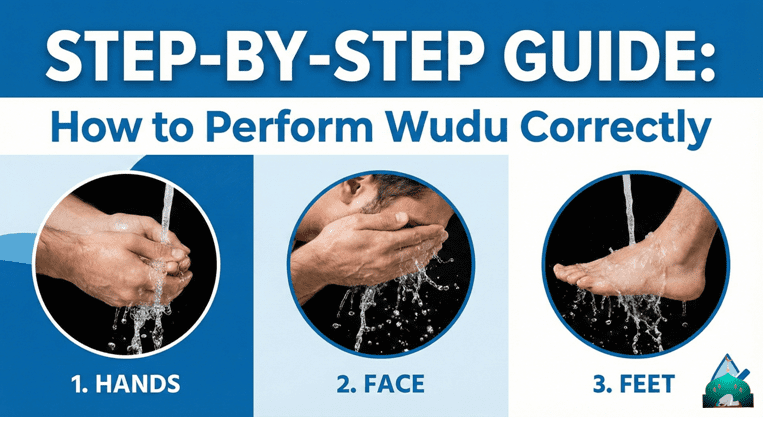
Step-by-Step Guide: How to Perform Wudu Steps Correctly
Performing Wudu Steps requires following a specific order (Tartib) and ensuring that water reaches all the necessary parts of the body. Below is the complete method based on the Sunnah of the Prophet Muhammad (ﷺ), combining the obligatory (Fard) and recommended (Sunnah) acts for a perfect ablution.
related post:
| Namaz Rakat Guide Table |
| fajr namaz rakat |
| zohar namaz rakat |
| asr namaz rakat |
| maghrib namaz rakat |
| isha namz rakat |
| practicaly method namaz |
| witr namaz |
| sunnat namaz |
| jumma namaz rakat |
| nafl namaz |
| namaz e janazah dua |
Step 1: Niyyah (Intention) and Saying Bismillah
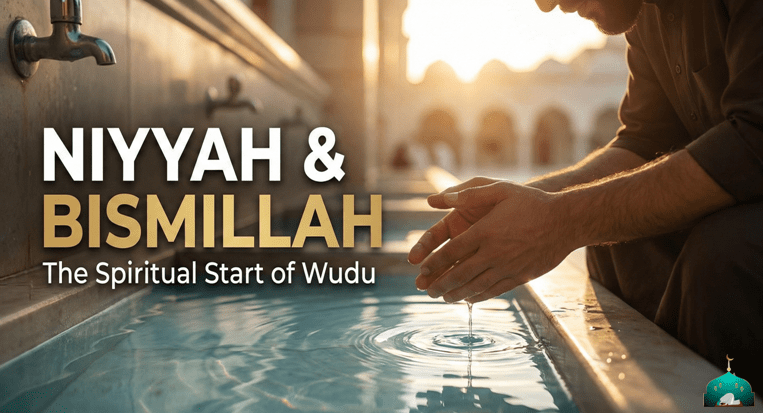
The action begins in the heart. Before touching the water, you must make the Niyyah (Intention) that you are performing Wudu to purify yourself for the sake of Allah. This does not need to be spoken aloud; a firm mental resolve is sufficient. Once your intention is set, say “Bismillah” (In the name of Allah). This sanctifies the act and is a highly emphasized Sunnah.
Step 2: Washing the Hands up to the Wrists (Three Times)
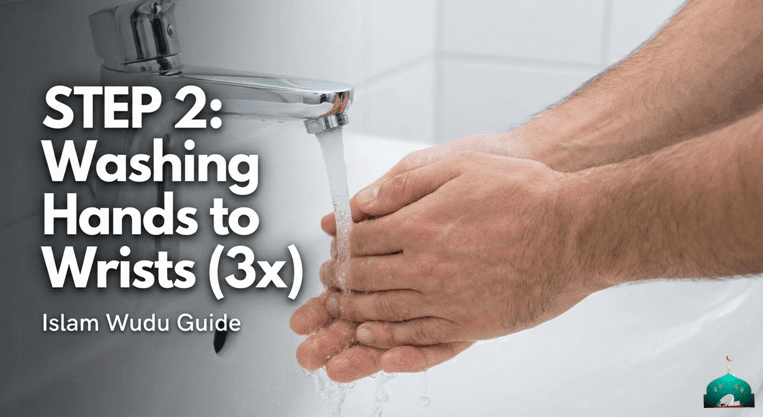
Begin by washing both hands thoroughly. Ensure that the water covers the skin completely, encompassing the palms, the back of the hands, and the wrists. If you are wearing a ring or a watch, move it slightly to ensure water reaches the skin beneath. It is also Sunnah to interlace your fingers (Khilal) to clean the spaces between them. Perform this washing three times.
Step 3: Rinsing the Mouth (Madmadah)
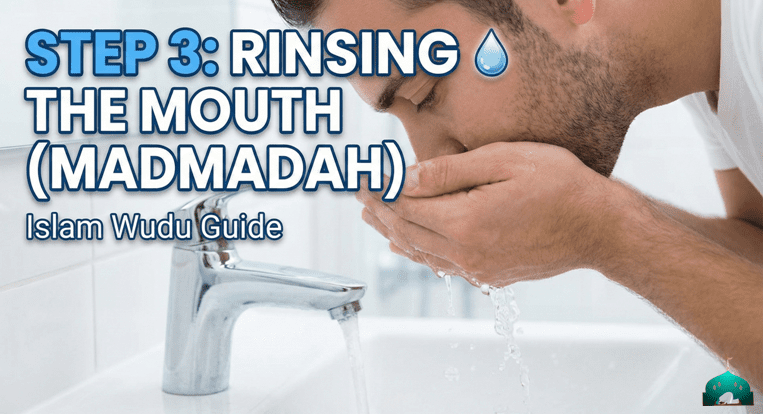
Take a handful of water with your right hand and place it into your mouth. Swish the water around vigorously inside the oral cavity to remove any food particles and cleanse the mouth completely. This action is called Madmadah. Spit the water out and repeat this process three times with fresh water. If available, using a Miswak (tooth stick) before or during this step is highly rewarding.
Step 4: Cleaning the Nose (Istinshaq and Istinthar)
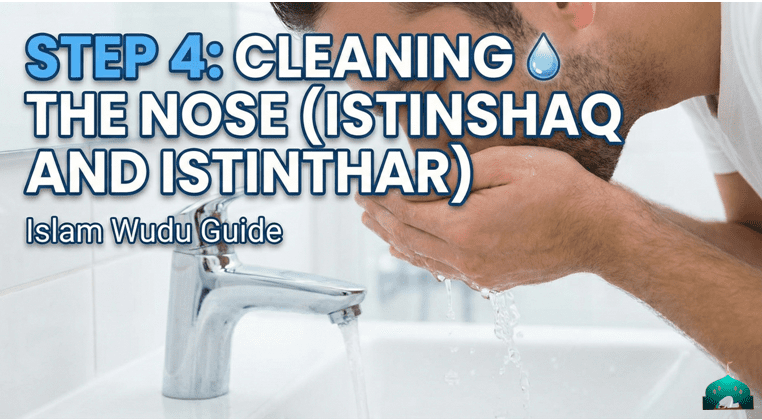
Scoop a handful of water with your right hand and gently sniff it into your nostrils to draw the water upwards; this is known as Istinshaq. Then, use your left hand to pinch the nose and blow the water out forcefully to expel impurities (Istinthar). Repeat this inhalation and exhalation cycle three times to ensure the nasal passages are clear.
Step 5: Washing the Entire Face
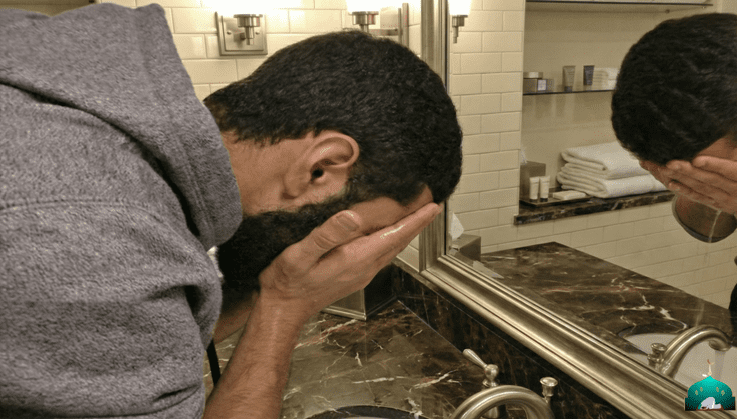
Collect water in both hands and wash your face three times. You must wash the entire boundary of the face: vertically from the natural hairline at the top of the forehead down to the bottom of the chin, and horizontally from one earlobe to the other. Ensure no part of this area remains dry. If you have a thick beard, run your wet fingers through it (Khilal) to ensure the water reaches the skin or the roots of the hair.
Step 6: Washing the Arms up to the Elbows (Right then Left)
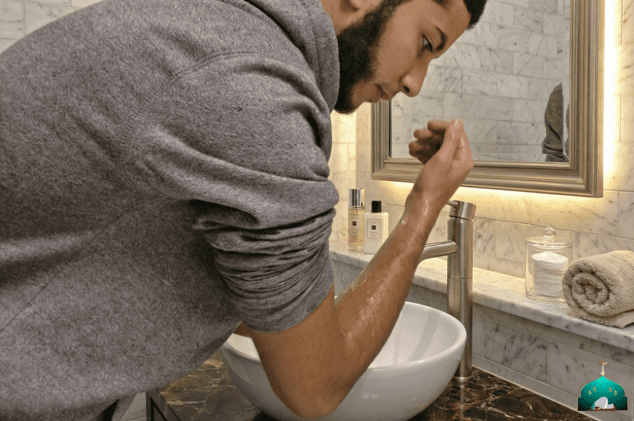
Start with your right arm. Wash from the tips of the fingers all the way up to and including the elbow. A common mistake is leaving the elbow dry, so ensure the water flows over the joint completely. Rub the wet hand over the arm to ensure thorough coverage. Wash the right arm three times. Once completed, repeat the exact same process three times for the left arm.
Step 7: Wiping the Head (Masah) and Ears
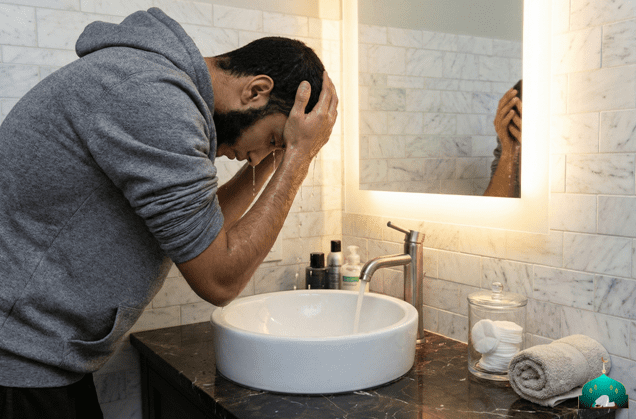
Wet your hands with fresh water and shake off any excess so they are damp, not dripping. Perform Masah by placing your wet palms at the front of your hairline and wiping backwards to the nape of the neck, then drawing them forward again to the starting point. This is done once. Immediately after, without taking new water, use your index fingers to clean the inner grooves of your ears and your thumbs to wipe the back of the earlobes.
Step 8: – Clean Your Ears (Once)
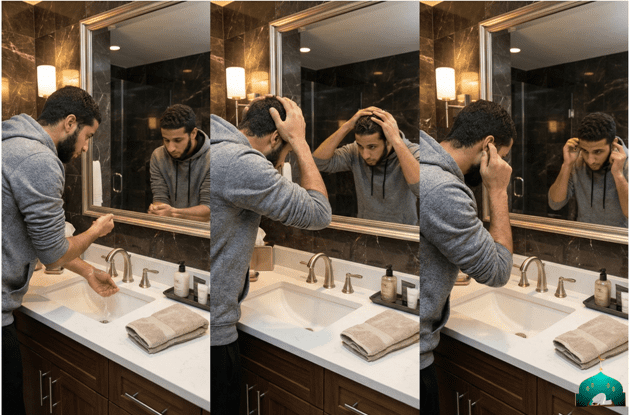
This step is done using the same water from Step 8. With your hands still wet, gently clean the inside of your ears using your index fingers, and wipe behind your ears with your thumbs.
This action is performed only once.
Step 9: Washing the Feet up to the Ankles (Right then Left)
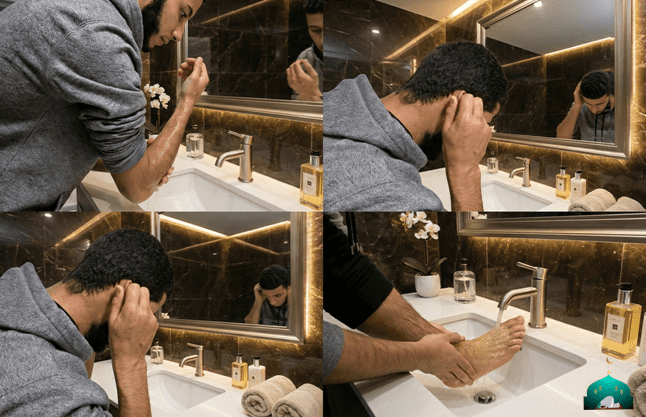
The final step is washing the feet. Begin with the right foot, ensuring you wash the entire foot up to and including the ankle bone. It is important to use your pinky finger to clean between the toes (Khilal) to ensure no dry spots remain. Wash the right foot three times. Then, proceed to wash the left foot in the same thorough manner, three times. Ensure the heels are well-washed, as they are often neglected.
Distinguishing the Essentials: Fard and Sunnah Parts of Wudu Steps
To ensure your prayer is valid, it is critical to understand the difference between the Fard (Obligatory) and Sunnah (Recommended) components of ablution.
- Fard acts are the absolute minimum requirements. If you miss even one of these, or leave even a dry spot the size of a pinhead on these specific body parts, your Wudu is invalid, and your prayer will not be accepted.
- Sunnah acts are the practices of the Prophet Muhammad (ﷺ). While omitting them does not invalidate the Wudu (provided the Fard acts are done), performing them brings immense reward and perfects the spiritual purity. Leaving them out habitually is blameworthy.
The 4 Fard (Obligatory) Acts of Wudu Steps
According to the Holy Quran (Surah Al-Ma’idah, 5:6), there are exactly four mandatory pillars of Wudu Steps. These must be performed for the ablution to count:
- Washing the Entire Face: You must wash the face once, from the top of the forehead (hairline) to the bottom of the chin, and from one earlobe to the other.
- Washing Both Arms including the Elbows: You must wash both arms once, ensuring the water covers everything from the fingertips up to and including the elbows.
- Masah (Wiping) of the Head: You must wipe a portion of the head with wet hands. (While scholars differ on the exact surface area—e.g., one-fourth of the head—wiping the head is universally obligatory).
- Washing Both Feet including the Ankles: You must wash both feet once, ensuring water reaches every part up to and including the ankle bones.
The Main Sunnah (Recommended) Acts of Wudu Steps
These acts transform the Wudu Steps from a simple washing into a rewarding act of worship that follows the beautiful example of the Prophet (ﷺ):
- Niyyah (Intention): Making the intention in the heart before starting.
- Saying “Bismillah”: Invoking the name of Allah at the beginning.
- Washing the Hands to the Wrists: Doing this three times at the very start, before putting hands into the water vessel.
- Using Miswak: Cleaning the teeth with a Miswak (or finger/brush) to purify the mouth.
- Madmadah and Istinshaq: Rinsing the mouth and cleaning the nose (sniffing water).
- Khilal: Interlacing the fingers and toes to clean between them, and combing wet fingers through a thick beard.
- Wiping the Whole Head: Wiping the entire head (rather than just a small part) and wiping the ears.
- Washing Thrice: Washing the face, arms, and feet three times each (the first time is Fard, the second and third are Sunnah).
- Tartib (Order): Performing the actions in the specific order mentioned in the Quran (Face -> Arms -> Head -> Feet).
- Muwalaat (Continuity): Washing the limbs in quick succession so that one part does not dry before the next is washed.
The Spiritual Aspect: Recommended Duas (Supplications)
Wudu is not merely a physical cleansing of the body; it is a spiritual preparation to stand before the Creator. While the water purifies the skin, the Duas (supplications) purify the heart. Reciting these prayers transforms the act of ablution from a daily routine into a high form of worship (Ibadah), earning immense rewards.
Dua Before Starting Wudu Steps
According to the teachings of the Prophet Muhammad (ﷺ), one should commence Wudu by mentioning the name of Allah. This sanctifies the action.
The Supplication: بِسْمِ ٱللَّٰهِ Transliteration: “Bismillah” Translation: (In the name of Allah)
Some narrations also recommend a slightly longer version: بِسْمِ اللهِ وَالْحَمْدُ للهِ Transliteration: “Bismillahi wal-hamdu lillahi” Translation: (In the name of Allah, and all praise is due to Allah)
Significance: The Prophet (ﷺ) stated that a Wudu performed without mentioning Allah’s name is incomplete (in terms of its spiritual perfection), emphasizing the importance of beginning with “Bismillah.”
The Dua After Completing Wudu Steps (Shahada)
Once you have finished washing your feet and completed the physical steps, it is highly recommended to face the Qiblah (if possible) and recite the Shahada followed by a specific supplication.
The Supplication (Shahada): أَشْهَدُ أَنْ لَا إِلَهَ إِلَّا اللهُ وَحْدَهُ لَا شَرِيكَ لَهُ، وَأَشْهَدُ أَنَّ مُحَمَّدًا عَبْدُهُ وَرَسُولُهُ
Transliteration: “Ash-hadu an la ilaha illallahu wahdahu la sharika lahu, wa ash-hadu anna Muhammadan ‘abduhu wa rasuluh.”
Translation: “I bear witness that there is no god worthy of worship except Allah alone, having no partner, and I bear witness that Muhammad is His slave and His Messenger.”
The Prayer for Purification: After the Shahada, it is Sunnah to add:
اَللَّهُمَّ اجْعَلْنِي مِنَ التَّوَّابِينَ وَاجْعَلْنِي مِنَ الْمُتَطَهِّرِينَ
Transliteration: “Allahumma j’alni minat-tawwabina waj’alni minal-mutatahhirin.”
Translation: “O Allah, make me among those who turn to You in repentance, and make me among those who are thoroughly purified.”
The Reward: There is a magnificent reward for this simple act. The Prophet Muhammad (ﷺ) said that whoever performs Wudu perfectly and then recites the above supplication, the eight gates of Paradise (Jannah) are opened for them, and they may enter through whichever one they please.
Nawaqid al-Wudu Steps: Things That Break (Nullify) Your Wudu
It is vital to know not just how to perform Wudu Steps, but how to keep it. In Islamic jurisprudence, certain actions or bodily states invalidate the state of purity. These are known as Nawaqid al-Wudu (Nullifiers of Wudu). Once any of these occur, your Wudu is broken, and you must perform it again before you can pray or touch the Quran.
Major Nullifiers
The following actions or occurrences definitively break your Wudu:
- 1. Discharges from the Private Parts: The exit of anything from the front or back passages breaks Wudu. This includes urine, stool, wind (gas), prostatic fluid (wadi), or pre-seminal fluid (madhiy).
- 2. Flowing of Blood or Pus: In the Hanafi school, if blood, pus, or yellow fluid exits from anywhere on the body (like a cut or nosebleed) and flows to a place that requires cleaning (i.e., it flows beyond the wound itself), the Wudu is broken. If the blood appears but does not flow, Wudu remains valid.
- 3. Mouthful Vomiting: Vomiting breaks Wudu if it is a mouthful (meaning it cannot be kept in the mouth without difficulty) and contains food, bile, or blood clots.
- 4. Deep Sleep: Sleeping while lying down, or sleeping in a position where the rear is not firmly seated on the ground (such that if the support were removed, one would fall), breaks Wudu. This is because deep sleep leads to a loss of control over the muscles, making it possible for wind to pass unnoticed.
- 5. Loss of Consciousness: Fainting, insanity, epilepsy, or intoxication (due to alcohol or drugs) breaks Wudu immediately, as one loses control over their bodily functions.
- 6. Laughing Aloud in Prayer: Laughing loudly during a prayer (Salah) that contains Ruku and Sujud—such that the person standing next to you can hear it—breaks both the Wudu and the Prayer.
Common Misconceptions (Things that do NOT break Wudu)
There are many cultural myths regarding what breaks Wudu Steps. It is important to know that the following actions do NOT invalidate your ablution:
- Cutting Hair or Nails: Trimming your nails or getting a haircut does not affect your Wudu. You do not need to repeat it afterwards.
- Changing Clothes: Being naked or changing your outfit does not break Wudu, provided no other nullifier occurs.
- Touching a Woman (for Hanafis): According to the Hanafi school, merely touching the skin of one’s spouse or a non-Mahram woman does not break Wudu, unless it is done with desire and results in a discharge.
- Vomiting a Little: If one vomits a small amount (less than a mouthful), Wudu remains valid.
- Dried Blood: If a wound bleeds slightly but the blood clots and does not flow from the wound site, Wudu is not broken.
- Looking in the Mirror: There is no basis for the belief that looking in a mirror breaks Wudu.
- Eating or Drinking: Eating food (including camel meat, in the Hanafi view) or drinking water/tea does not break Wudu, though it is Sunnah to rinse the mouth before praying if the food was greasy or had a strong odor.
Table of wudu steps
| Action / Event | Does it Break Wudu? | Condition / Rule (Hanafi) |
| Bleeding | ✅ YES | If the blood flows from the wound. |
| Vomiting | ✅ YES | If it is a mouthful (cannot be held back). |
| Sleeping | ✅ YES | If sleeping deep while lying down or leaning heavily. |
| Laughing | ✅ YES | Only if laughing aloud during Salah (Prayer). |
| Cutting Nails/Hair | ❌ NO | Personal grooming does not affect Wudu. |
| Touching a Woman | ❌ NO | Normal touch does not break Wudu (unless discharge occurs). |
| Changing Clothes | ❌ NO | Being naked or changing dress has no effect. |
| Eating/Drinking | ❌ NO | Rinse mouth recommended, but Wudu stays valid. |
Author requested: I have written this article on “How to Perform Wudu (Wudu Steps)” after thorough research, consulting authentic Islamic books and reliable sources to ensure every detail adheres to the teachings of the Quran and Sunnah (Hanafi Fiqh). It is my sincere endeavor to practice the knowledge shared herein myself.
However, as humans, we are prone to error. If you notice any unintentional mistake or discrepancy, please kindly inform us so it can be corrected immediately.
If you found this guide helpful, I humbly request you to remember me in your prayers and share this article with your family and friends. Spreading beneficial knowledge is a Sadaqah Jariyah (continuous charity).
Conclusion
Mastering the correct Wudu steps is an essential duty for every Muslim, as it serves as the gateway to Salah (Prayer). As we have discussed, Wudu is not simply a mechanical routine of washing limbs; it is a profound act of worship that purifies the believer physically and spiritually, preparing the heart to stand before Allah (SWT).
By adhering to the Fard (obligatory) acts, we ensure our prayer is valid, and by incorporating the Sunnah (recommended) acts, we revive the beautiful tradition of the Prophet Muhammad (ﷺ) and maximize our rewards. Whether you are learning for the first time or refreshing your knowledge, remember that a perfect Wudu leads to a perfect Prayer.
FAQs Wudu Steps
What are the 4 mandatory Wudu Steps?
The 4 Farz (obligatory) acts of Wudu, without which the ablution is invalid, are:
- Washing the entire face once.
- Washing both arms up to and including the elbows once.
- Wiping (Masah) of at least one-fourth of the head.
- Washing both feet up to and including the ankles once.
What is the basic wudu?
Basic Wudu refers to performing only the 4 Fard (obligatory) acts mentioned above. If water is scarce or time is extremely short, performing these four actions is sufficient to make the Wudu valid for prayer. However, habitually leaving out the Sunnah steps reduces the reward.
What are the 7 steps of wudu?
When people refer to the “7 steps,” they are usually summarizing the main physical actions of the Sunnah method:
- Washing Hands (Wrists).
- Rinsing Mouth & Nose.
- Washing Face.
- Washing Arms.
- Wiping Head (Masah).
- Wiping Ears.
- Washing Feet.
What are the 12 steps of wudu?
The “12 steps” breakdown typically includes the internal and spiritual actions along with the physical ones to form a complete guide:
- Niyyah (Intention).
- Saying Bismillah.
- Washing hands to wrists.
- Using Miswak (cleaning teeth).
- Madmadah (Rinsing mouth).
- Istinshaq (Cleaning nose).
- Washing the face.
- Washing arms to elbows.
- Masah of the head.
- Wiping the ears.
- Washing the feet.
- Reciting the Ash-hadu Dua at the end.
How to do wudu properly step by step?
To do Wudu properly:
- Make Intention and say Bismillah.
- Wash hands 3 times.
- Rinse mouth and nose 3 times.
- Wash the face 3 times.
- Wash arms (right then left) including elbows 3 times.
- Wipe the head and ears once.
- Wash feet (right then left) including ankles 3 times. (Ensure no dry spots remain).
What is the pattern of wudu?
The correct pattern is called Tartib (Order). You must wash the body parts in the sequence mentioned in the Quran: Face ➔ Arms ➔ Head ➔ Feet. Changing this order (e.g., washing feet before face) goes against the Sunnah, though the Wudu remains valid in the Hanafi school (provided all parts are washed), but it is disliked to do so intentionally.
How to do wudu female?
There is no difference in the method of Wudu for men and women. A woman performs the exact same steps: washing the face, arms, wiping the head, and washing feet.
- Note: Women must ensure that water reaches the skin. Therefore, waterproof makeup, thick layer of lipstick, or nail polish that prevents water from touching the nails must be removed before Wudu.
Can kissing break wudu?
In the Hanafi Fiqh: A simple kiss (e.g., on the cheek or lips) between spouses does not break Wudu, provided there is no exchange of fluids (saliva) and no sexual discharge occurs. However, if the kiss is passionate and leads to the release of Pre-seminal fluid (Madhiy), then Wudu is broken.
Can sperm break wudu?
Yes, the release of sperm breaks Wudu. However, more importantly, the release of sperm (due to intimacy or a wet dream) requires Ghusl (Full Ritual Bath). Wudu alone is not sufficient to purify oneself from the release of sperm; a full bath is mandatory.
What are common mistakes to avoid during wudu?
- Leaving the heels or elbows dry (incomplete washing).
- Splashing water forcefully on the face.
- Wasting water by leaving the tap running.
- Not removing nail polish (for women), which blocks water.
- Talking about worldly matters while performing Wudu.
How to pray Islam step by step?
While this article focuses on Wudu, the basic steps of Salah (Prayer) after Wudu are:
- Takbir: Raise hands and say “Allahu Akbar”.
- Qiyam: Stand and recite Surah Al-Fatiha and another Surah.
- Ruku: Bow down with hands on knees.
- Qawmah: Stand up straight again.
- Sujud: Prostrate on the ground (two times).
- Tashahhud: Sit and recite Attahiyat.
- Salam: Turn head right and left to end prayer. (We recommend reading a dedicated article on “How to Perform Salah” for detailed instructions).