

Istikhara Namaz is a Sunnah taught by Prophet Muhammad ﷺ to seek Allah’s guidance in important life decisions. Through two voluntary rak‘ahs and a du‘a, a believer asks Allah to choose what is best for their faith, life, and hereafter. This guide explains its meaning, method, timing, authentic du‘a, and common misconceptions for proper practice.
What Is Istikhara Namaz
Istikhara Namaz is a Sunnah prayer where a believer asks Allah for guidance in important decisions. It involves two voluntary rak‘ahs and a special du‘a, seeking ease if the matter is good or contentment if it is not. Istikhara combines effort with trust in Allah, bringing peace and clarity to the heart.
Author real activity : Whenever I need guidance, I perform Istikhara (a prayer for guidance).
When to Pray Istikhara Namaz
Istikhara Can Be Prayed at Any Time
Istikhara Namaz can be offered at almost any time of the day or night. There is no fixed hour for this prayer because decisions can arise at any moment in life. Whenever a person feels uncertain or needs guidance, they can turn to Allah through Istikhara with a sincere heart and clear intention.
Times to Avoid for Istikhara Namaz
Although Istikhara Namaz is a voluntary prayer, it should not be performed during the prohibited times of Salah. These include the period after Fajr until sunrise and after Asr until sunset. Apart from these times, Istikhara may be prayed freely without hesitation.
Best Time to Pray Istikhara Namaz
Praying Istikhara Namaz at night is highly recommended by many scholars. The time after Isha or during Tahajjud is especially virtuous, as the heart is calmer and distractions are fewer. In these quiet hours, a believer can connect deeply with Allah and seek guidance with full concentration.
Istikhara Namaz Before Important Decisions
Istikhara Namaz can also be prayed shortly before an important event, such as a job interview, marriage proposal, travel plan, or business decision. Offering Istikhara at such moments helps remove anxiety and strengthens trust in Allah, knowing that He will guide the outcome toward what is best.
How to Pray Istikhara Namaz – Step by Step
- Make intention (Niyyah): Make intention in your heart to pray two rak‘ahs of Salat-ul-Istikhara to seek Allah’s guidance for a specific matter.
- Perform wudu: Perform proper ablution and stand in a clean, quiet place facing the Qiblah.
- Begin the prayer: Raise your hands and say اللّٰهُ أَكْبَرُ to start the Salah.
- Fold your hands: Place the right hand over the left on the chest with humility and focus.
- Recite Sana:
سُبْحَانَكَ اللّٰهُمَّ وَبِحَمْدِكَ، وَتَبَارَكَ اسْمُكَ، وَتَعَالَىٰ جَدُّكَ، وَلَا إِلٰهَ غَيْرُكَ - Recite Ta‘awwudh:
أَعُوذُ بِاللّٰهِ مِنَ الشَّيْطَانِ الرَّجِيمِ - Recite Basmala:
بِسْمِ اللّٰهِ الرَّحْمٰنِ الرَّحِيمِ - Recite Surah al-Fatiha:
الْحَمْدُ لِلّٰهِ رَبِّ الْعَالَمِينَ … وَلَا الضَّالِّينَ - Recite another Surah: Recite any Surah or at least three verses of the Qur’an.
- Go into Ruku‘: Say اللّٰهُ أَكْبَرُ and bow, reciting:
سُبْحَانَ رَبِّيَ الْعَظِيمِ (at least three times) - Rise from Ruku‘: Say:
سَمِعَ اللّٰهُ لِمَنْ حَمِدَهُ
then say:
رَبَّنَا لَكَ الْحَمْدُ - Go into first Sujood: Say اللّٰهُ أَكْبَرُ and prostrate, reciting:
سُبْحَانَ رَبِّيَ الْأَعْلَىٰ (three times) - Sit briefly between Sujood: Sit calmly and say:
رَبِّ اغْفِرْ لِي - Second Sujood: Perform the second prostration and recite:
سُبْحَانَ رَبِّيَ الْأَعْلَىٰ - Stand for second rak‘ah: Stand up and again recite Surah al-Fatiha and another Surah.
- Repeat Ruku‘ and Sujood: Complete bowing and two prostrations as done in the first rak‘ah.
- Sit for Tashahhud: Sit and recite:
التَّحِيَّاتُ لِلّٰهِ وَالصَّلَوَاتُ وَالطَّيِّبَاتُ… إِلَىٰ عِبَادِ اللّٰهِ الصَّالِحِينَ - Send Salawat (Durood): Recite Durood-e-Ibrahim:
اللّٰهُمَّ صَلِّ عَلَىٰ مُحَمَّدٍ وَعَلَىٰ آلِ مُحَمَّدٍ… إِنَّكَ حَمِيدٌ مَجِيدٌ - End with Salam: Turn your head right and left saying:
السَّلَامُ عَلَيْكُمْ وَرَحْمَةُ اللّٰهِ - Recite Istikhara Du‘a: After completing the Salah, sincerely recite the Du‘a-e-Istikhara in Arabic, keeping your decision clearly in mind and placing full trust in Allah’s wisdom.
Making Intention (Niyyah) for Istikhara Namaz
How to Make Niyyah for Istikhara Namaz
The intention (niyyah) for Istikhara is made in the heart before starting the prayer. There is no fixed wording that must be spoken aloud. A person should simply intend that they are praying two rak‘ahs of voluntary (nafl) prayer to seek Allah’s guidance regarding a specific matter.
Focus the Heart on Seeking Allah’s Guidance
Before beginning the salah, think clearly about the decision you are confused about and turn your heart sincerely toward Allah. The purpose of Istikhara is not to demand a result, but to place the matter entirely in Allah’s hands, trusting that He knows what is best.
Sincerity and Trust in Niyyah
The niyyah should be made with humility, sincerity, and complete trust in Allah’s wisdom. A person should be ready to accept whatever outcome Allah makes easy afterward. When the intention is pure, Istikhara brings inner peace, reassurance, and closeness to Allah—even before any sign or outcome becomes clear.
Recite the Du‘a of Istikhara Namaz
After completing the two rak‘ahs of Istikhara, recite the Istikhara du‘a with sincerity and concentration. Keep the decision you are seeking guidance about clearly in your heart. Trust in Allah fully while asking for what is best for your dīn, worldly life, and akhirah.
Arabic Du‘a of Istikhara:
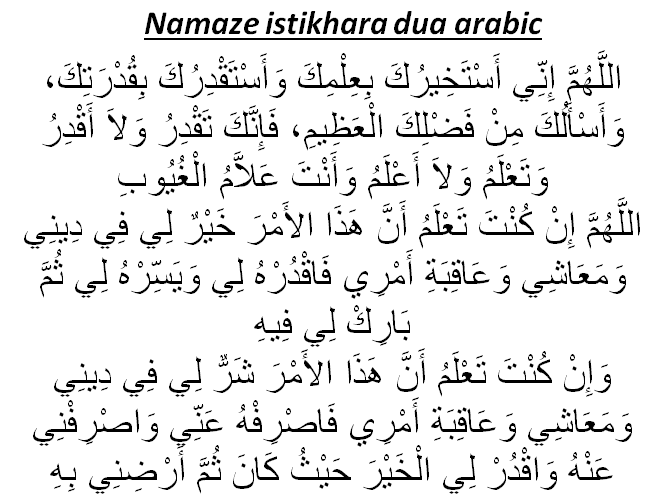
Transliteration:
Allahumma innee astakheeruka bi ‘ilmika wa astaqdiruka bi qudratika wa as’aluka min fadlika al-‘azheem, fa innaka taqdiru wa la aqdiru wa ta’lamu wa la a’lamu wa anta ‘allaam ul-ghuyoob.
Allahumma in kunta ta’lamu anna haadha al-amra khayrun lee fee deenee wa ma’aashee wa ‘aaqibati amree faqdurhu lee wa yassirhu lee thumma baarik lee feehi.
Wa in kunta ta’lamu anna haadha al-amra sharrun lee fee deenee wa ma’aashee wa ‘aaqibati amree fasrifhu ‘annee wasrifnee ‘anhu waqdur lee al-khayra haythu kaana thumma ardinee bih.
English Meaning:
O Allah! I seek Your guidance by Your knowledge, and I seek ability by Your power, and I ask You of Your great bounty. You are able, and I am not; You know, and I do not, and You are the Knower of the unseen.
O Allah! If You know this matter is good for me in my religion, my life, and the outcome of my affairs, then decree it for me, make it easy for me, and bless it.
And if You know this matter is bad for me in my religion, my life, and the outcome of my affairs, then turn it away from me and turn me away from it, and decree for me what is good wherever it may be and make me satisfied with it.
Dreams and Signs in Istikhara Namaz
Dreams Are Not the Main Answer
Some cultures believe that Istikhara answers always come in dreams. Islamic guidance: While Allah can show signs in dreams, the Prophet ﷺ did not specify dreams as a required or guaranteed answer. Dreams can be:
- From Allah – meaningful and guiding dreams.
- From the Nafs (personal thoughts) – reflecting your desires and worries.
- From Shaytan – misleading or confusing dreams.
So, seeing a dream after Istikhara is optional, not a rule.
Signs in Daily Life
Often, guidance comes through circumstances and feelings rather than visions in sleep. Examples:
- Feeling ease or contentment toward a decision.
- Doors opening or closing naturally (like job offers or opportunities).
- Inner peace or discomfort regarding a choice.
This is considered a sign from Allah if you approach it with sincerity and trust.
How to Interpret
- Positive Feeling: If the decision feels easy, blessed, and peaceful, it may be the guidance you seek.
- Discomfort or Obstacles: If challenges appear repeatedly or your heart feels uneasy, it could indicate the decision is not suitable.
- Always remember: Istikhara does not give immediate clarity; it guides you gradually while Allah arranges what is best for you.
Key Point
Istikhara is about trusting Allah’s wisdom, not waiting for magical dreams or signs. Your heart’s ease and the unfolding of circumstances are the true indicators.
Istikhara Namaz for Marriage and Love
- Istikhara guides in major life decisions like marriage.
- Seeks Allah’s blessing to unite or distance hearts as best for you.
Du‘a for Marriage from the Qur’an
- رَبَّنَا هَبْ لَنَا مِنْ أَزْوَاجِنَا وَذُرِّيَّـٰتِنَا قُرَّةَ أَعْيُنٍۢ وَٱجْعَلْنَا لِلْمُتَّقِينَ إِمَامًا
- A prayer for pious spouses and offspring (Surah Al-Furqan 25:74).
Du‘a for Love from Prophet Dawud (AS)
- اللهم إني أسألك حبك، وحب من يحبك، والعمل الذي يبلغني حبك
- A prayer to seek Allah’s love, love of those who love Him, and deeds that bring closeness to Allah.
Benefits of Istikhara Namaz
- Strengthens trust in Allah – By turning to Allah for guidance, a believer reinforces reliance on His knowledge and wisdom, acknowledging that the ultimate outcome is in His hands.
- Reduces confusion and anxiety – When faced with tough decisions, performing Istikhara helps clarify the mind, easing stress and uncertainty.
- Brings inner peace and contentment – After praying Istikhara, one often feels a sense of tranquility, knowing that Allah is guiding the best outcome.
- Fulfills the Sunnah of the Prophet ﷺ – Following the practice taught by the Prophet ﷺ ensures a connection to prophetic guidance and spiritual discipline.
- Encourages patience and reflection – Istikhara teaches that answers may not be immediate, helping believers develop patience and trust in Allah’s timing.
- Promotes thoughtful decision-making – The prayer encourages believers to combine effort, consultation, and supplication, balancing action with spiritual reliance.
- Provides clarity in relationships and life choices – Whether for marriage, career, or personal matters, Istikhara helps identify what aligns with faith, wellbeing, and life goals.
Author notice: I humbly request all readers to sincerely practice Istikhara Namaz in their daily life and share its benefits with others. May Allah guide us all to what is best and keep our hearts content with His divine wisdom.
If you find any errors or incomplete information in this guide, please correct them or let me know. May Allah accept our efforts and guide us all to the best path.
Conclusion
Istikhara Namaz is a powerful way to seek Allah’s guidance in every important decision. By performing it sincerely, you strengthen your faith, reduce confusion, and find peace in Allah’s wisdom. Remember, the outcome may not always be immediate, but trusting Allah ensures contentment and spiritual growth.
Call to Action
Do not delay in seeking guidance from Allah. Perform Istikhara for your important decisions, trust His plan, and remain patient. Share this knowledge with others so they too can benefit from this Sunnah and make informed, faith-centered choices in life.
FAQs Istikhara Namaz
1. How to perform Istikhara Namaz?
Pray 2 voluntary (nafl) rak‘ahs, make a sincere intention, and recite the Istikhara du‘a while keeping your decision in mind.
2. How many rak‘ahs are in Istikhara Namaz?
Istikhara consists of 2 rak‘ahs.
3. What to read in Istikhara Namaz?
Recite Surah Al-Fatihah, another short surah, and after Salah, recite the Istikhara du‘a.
4. What is the right time to do Istikhara?
Any time except prohibited times (after Fajr, after Asr, sunrise, sunset). Night after Isha or during Tahajjud is preferred.
5. Can Istikhara results change?
Yes, Allah guides according to what is best, which may take time or appear differently than expected.
6. What if I feel confused after Istikhara?
Consult trusted people, reflect on ease or obstacles, and trust Allah’s guidance.
7. Is it necessary to do Istikhara for 7 days?
No, there is no requirement to do it for 7 days; one correct Istikhara is enough.
8. How to pray Salatul Istisqa?
It is a separate prayer for rain, usually prayed in congregation with du‘a for rainfall.
9. Can I read Istikhara Dua from my phone?
Yes, reading from your phone is fine as long as you understand and concentrate.
10. Is it necessary to dream after Istikhara?
No, dreams are not required; guidance comes through ease, clarity, or peace of mind.
11. Can I repeat Istikhara if unsure?
Yes, you can repeat it if sincerely needed, but trust Allah’s plan.
12. How to do Istighfar?
Say “Astaghfirullah” (I seek Allah’s forgiveness) sincerely, and try to correct mistakes.
13. How does Istikhara get answered?
Through ease, obstacles, clarity in your decision, or a sense of peace about the matter.
14. What are the signs after Istikhara?
Feeling peace, things becoming easy, or obstacles preventing a harmful decision.
15. How to do Istikhara step by step?
Perform wudu → Make intention → Pray 2 nafl rak‘ahs → Recite Istikhara du‘a → Keep your matter in mind.
16. Is Istikhara a Sunnah or Nafl?
Istikhara is a Sunnah prayer taught by Prophet Muhammad ﷺ.
Pingback: Online Quran Teaching & Classes | Learn Quran And Tajweed