
Learn Dua e Qunoot in English with full translation, Roman transliteration, Arabic text, Witr prayer method, PDF, and MP3 audio. Easy guide for beginners, kids, and daily Islamic learning.
Dua e Qunoot in English with Arabic and Transliteration
Dua e Qunoot Arabic
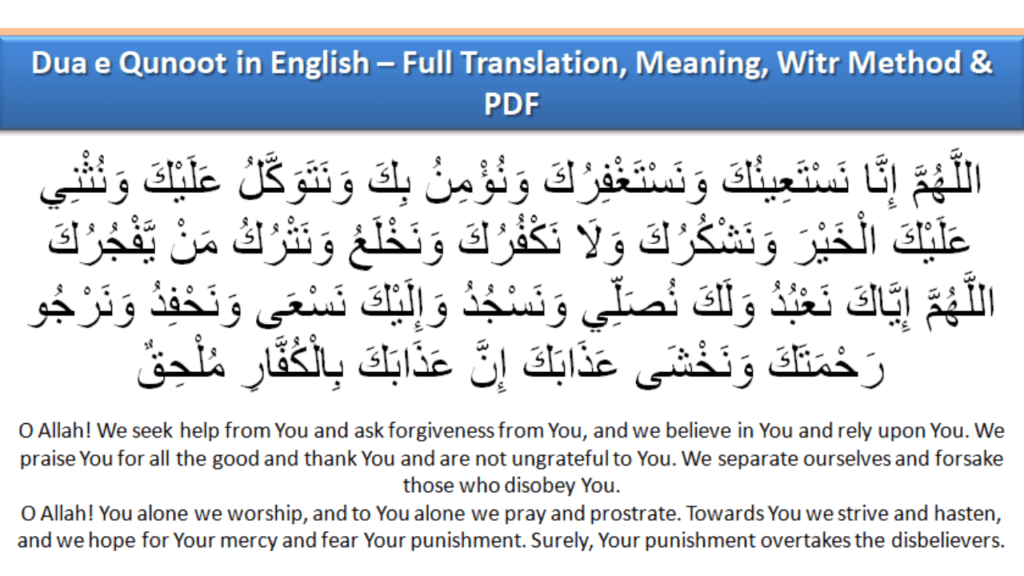
اَللَّهُمَّ اِنَّا نَسۡتَعِيۡنُكَ وَنَسۡتَغْفِرُكَ وَنُؤۡمِنُ بِكَ وَنَتَوَكَّلُ عَلَيۡكَ وَنُثۡنِىۡ عَلَيۡكَ ٱلۡخَيۡرَ وَنَشۡكُرُكَ وَلَا نَكۡفُرُكَ وَنَخۡلَعُ وَنَتۡرُكُ مَنۡ يَّفۡجُرُكَ. اَللَّهُمَّ اِيَّاكَ نَعۡبُدُ وَلَكَ نُصَلِّئ وَنَسۡجُدُ وَاِلَيۡكَ نَسۡعٰى ونَحۡفِدُ ونَرۡجُوۡا رَحۡمَتَكَ وَنَخۡشٰى عَذَابَكَ اِنَّ عَذَابَكَ بِالۡكُفَّارِ مُلۡحِقٌٌ
Audeo voice MP3 Download
English
O Allah! We seek help from You and ask forgiveness from You, and we believe in You and rely upon You. We praise You for all the good and thank You and are not ungrateful to You. We separate ourselves and forsake those who disobey You.
O Allah! You alone we worship, and to You alone we pray and prostrate. Towards You we strive and hasten, and we hope for Your mercy and fear Your punishment. Surely, Your punishment overtakes the disbelievers.
Transliteration
Allahumma inna nasta‘eenuka wa nastaghfiruka wa nu’minu bika wa natawakkalu ‘alayka wa nuthni ‘alaykal khayra wa nashkuruka wa la nakfuruka wa nakhla‘u wa natruku may yafjuruk.
Allahumma iyyaka na‘budu wa laka nusalli wa nasjudu wa ilayka nas‘a wa nahfidu wa narju rahmataka wa nakhsha ‘adhabaka inna ‘adhabaka bil-kuffari mulhiq.
Dua e Qunoot in English and Arabic PDF
What Is Dua e Qunoot?
Dua e Qunoot is a special supplication recited in Witr namaz during Isha Namaz. Muslims read this dua to ask Allah for guidance, mercy, forgiveness, and protection. It is one of the most important duas in daily prayer life. Many beginners search for its English meaning to understand it easily.
Why Dua e Qunoot Is Important in Islam
This supplication teaches Muslims to rely completely on Allah in every situation. It includes praise, gratitude, and requests for mercy and forgiveness. Reciting it regularly strengthens faith and increases spiritual connection with Allah. It is widely practiced by Muslims around the world.
Related Post
| Namaz Rakat Guide Table |
| fajr namaz rakat |
| zohar namaz rakat |
| asr namaz rakat |
| maghrib namaz rakat |
| isha namz rakat |
| practicaly method namaz |
Easy Dua for Beginners
Beginners often look for a simple and easy version to start learning comfortably. Short pronunciation guides and simple English explanations make learning easier. Repeating small portions daily helps improve memory. Consistency is the best way to learn quickly.
How to Recite Dua e Qunoot in Witr Prayer
This supplication is recited in the third rakat of Witr prayer before going into Ruku. Muslims raise their hands and read it with humility and concentration. It is usually recited softly during Salah. Different schools of thought may follow slightly different methods.
Which Rakat Contains
The supplication is commonly recited in the third rakat of Witr prayer. It comes after Surah recitation and before Ruku. Muslims usually perform it during Isha prayer at night. This method is commonly followed in Hanafi practice.
Step-by-Step Witr Namaz Method
Witr prayer is generally performed in three rakats after Isha prayer. The supplication is recited in the last rakat before bowing. Following the correct sequence helps maintain proper prayer method. Beginners should practice slowly for better understanding.
Benefits of Reading Dua e Qunoot Daily
Reciting this supplication daily brings spiritual peace and strengthens faith. It reminds Muslims to seek help and guidance only from Allah. Many believers feel emotional comfort while reading it regularly. Consistent recitation also improves connection with prayer.
Spiritual Importance of This Supplication
This supplication contains praise, gratitude, worship, and requests for mercy. It teaches humility and dependence upon Allah in all matters. Muslims recite it sincerely to seek forgiveness and blessings. Its message holds deep spiritual value in Islam.
Slow Recitation for Kids and Beginners
Children and beginners learn more comfortably with slow-paced recitations. Easy pronunciation guides help reduce mistakes during reading. Repetition improves confidence and memory retention. Many Islamic teachers recommend this learning method.
Conclusion
Dua e Qunoot is a beautiful and powerful supplication that teaches Muslims to seek Allah’s guidance, mercy, forgiveness, and protection. Learning its English translation helps believers understand the deeper meaning and connect more sincerely during Witr prayer. Whether you are a beginner, student, or someone trying to improve your Islamic knowledge, regular practice of Dua e Qunoot can strengthen your faith and improve your relationship with Allah. Try to memorize it slowly, understand its meaning, and recite it daily with sincerity and devotion.
FAQs Dua e Qunoot in English
What Is the Dua e Qunoot in English?
Dua e Qunoot in English is the translated meaning of the supplication recited during Witr prayer. It includes asking Allah for help, forgiveness, mercy, guidance, and protection from punishment. Many Muslims read the English translation to understand the deeper meaning of the dua.
What to Read During 3 Witr?
In the third rakat of Witr prayer, Muslims usually recite Surah Al-Fatiha and another Surah, then read Dua e Qunoot before going into Ruku. After that, the prayer is completed normally. Different Islamic schools may have slight variations in method.
Can I Pray Witr Without Dua Qunoot?
Yes, if you do not remember Dua e Qunoot, you may recite another short supplication temporarily. However, Muslims should try to learn and memorize the authentic Dua e Qunoot as soon as possible. Allah knows your intention and effort.
In Which Rakat Is Dua e Qunoot Recited?
Dua e Qunoot is commonly recited in the third rakat of Witr prayer before Ruku. This method is widely followed in the Hanafi school of thought.
What Can I Recite Instead of Dua e Qunoot in Witr?
If you have not memorized Dua e Qunoot, you can read another short dua such as “Rabbana Atina Fid Dunya Hasanah” or any authentic supplication you know. This is allowed until you learn the proper dua.
Is It a Sin if I Miss Witr?
Witr prayer is highly important in Islam. According to the Hanafi school, it is wajib, so intentionally missing it regularly is sinful. If missed accidentally, it should be prayed later as Qaza.
Can I Pray Only 4 Fard and 3 Witr for Isha?
Yes, if you are short on time or unable to pray all Sunnah prayers, you can pray the 4 Fard of Isha and 3 Witr. However, offering the Sunnah prayers as well brings greater reward and blessings.
Can I Pray Witr Without Dua Qunoot?
Yes, if you have not memorized Dua e Qunoot, you may recite another short supplication temporarily. However, Muslims should try to learn the authentic Dua e Qunoot as soon as possible for proper Witr prayer.
In Which Rakat Is Dua e Qunoot Recited?
Dua e Qunoot is usually recited in the third rakat of Witr prayer before going into Ruku. This method is commonly followed in the Hanafi school of thought.
What Can I Recite Instead of Dua e Qunoot in Witr?
If you do not remember Dua e Qunoot, you can read another authentic supplication such as “Rabbana Atina Fid Dunya Hasanah” until you memorize the original dua.
Is It a Sin if I Miss Witr?
Witr prayer is highly important in Islam. According to the Hanafi school, intentionally missing Witr regularly is sinful. If missed accidentally, it should be offered later as Qaza prayer.