
What Does It Mean to Be Alive After Death?
One of the fundamental beliefs in Islam is that after death, a day will come when Allah will bring all of creation back to life. This day is known as the Day of Judgment (Qiyamah). Muslims believe that life in this world is not permanent; rather, it is a place of test and trial. After the end of this worldly life, a new life will begin in which every person will be held accountable for the deeds they performed.
Being alive after death means that when the Day of Judgment arrives, the earth, the heavens, mountains, seas, humans, jinn, and angels will all perish. In other words, the entire universe will come to an end. At that moment, only Allah will remain, because He is eternal and everlasting.
When Allah wills, He will bring Angel Israfil (peace be upon him) back to life. Angel Israfil is the angel appointed by Allah to blow the Trumpet (Sur). When he blows the Trumpet for the second time by the command of Allah, all creation will begin to come back to life.
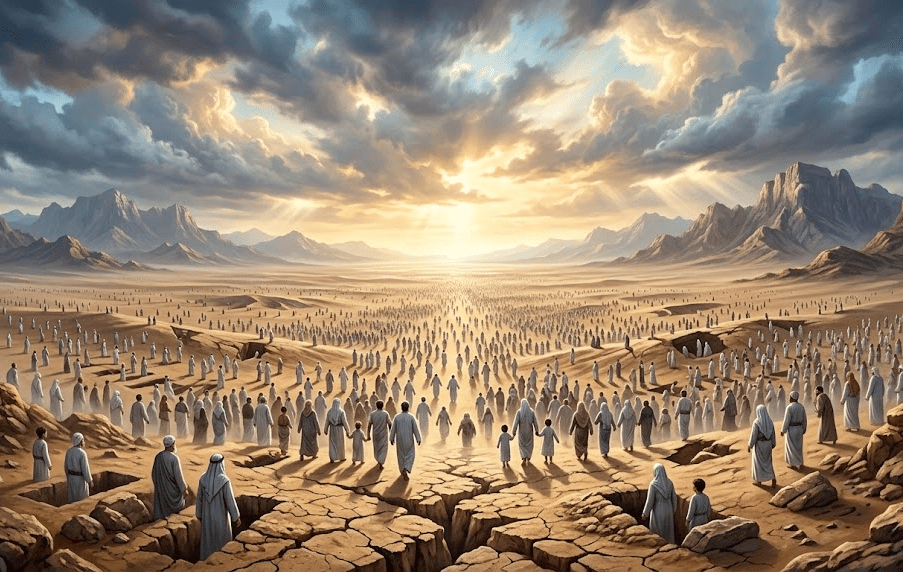
At that moment, all the people who have died will rise from their graves. Even if thousands of years have passed since their death, and even if their bodies have turned into dust, Allah has the power to recreate them. Just as Allah created humans for the first time, He can bring them back to life again with ease.
After everyone is resurrected, all people will be gathered in the Field of Gathering (Maidan-e-Hashr). This will be a vast place where every human being—from the beginning of the world until its end—will be assembled together. Every person will then be presented before Allah.
On that day, accountability (Hisab) will take place. All the good and bad deeds of every person will be examined. Every action performed in this world, whether small or large, will be recorded and presented. No injustice will be done to anyone, and each person will receive the reward or punishment according to their deeds.
Those whose good deeds outweigh their bad deeds, who worshipped Allah, followed the righteous path, and treated others with kindness, will be rewarded with Paradise (Jannah). Paradise is a place of eternal happiness where there will be no pain, sorrow, or hardship.
However, those who committed evil deeds, disobeyed Allah, and lived their lives in sin will be sent to Hell (Jahannam) according to their actions. Hell is a place of punishment and suffering.
Therefore, in Islam it is believed that the Day of Judgment, the accounting of deeds, Paradise, and Hell are all true and certain realities. Every Muslim must believe in these truths.
Anyone who denies resurrection after death, the Day of Judgment, accountability, Paradise, or Hell is considered to have rejected a fundamental belief of Islam.
For this reason, a person should consider this worldly life as a test and strive to perform good deeds. Truthfulness, worship of Allah, and kindness toward others are the actions that will lead a person to success in the Hereafter (Akhirah).
Namaz-related post
| Namaz Rakat Guide Table |
| fajr namaz rakat |
| zohar namaz rakat |
| asr namaz rakat |
| maghrib namaz rakat |
| isha namz rakat |
| practicaly method namaz |
| witr namaz |
| sunnat namaz |
| jumma namaz rakat |
| nafl namaz |
Importance of This Belief in Islam
According to Islamic belief:
- Accountability (Hisab) is true
- Paradise (Jannah) is true
- Hell (Jahannam) is true
Anyone who denies these fundamental beliefs goes against the core teachings of Islam. Therefore, every Muslim is required to believe in the Day of Judgment and life after death.
Conclusion
The belief in life after death is a central part of Islamic faith. It reminds people that this worldly life is temporary and that the real and eternal life is in the Hereafter. On that day, every person will receive the reward or punishment according to their deeds.
FAQs About Life After Death in Islam
1. What does life after death mean in Islam?
Life after death in Islam refers to the belief that after a person dies, they will be resurrected on the Day of Judgment. Allah will bring all humans back to life to account for their deeds and determine their final place in the Hereafter.
2. Who will blow the trumpet on the Day of Judgment?
According to Islamic belief, the angel Hazrat Israfil (peace be upon him) will blow the trumpet. When it is blown for the second time, all humans and creation will be resurrected from their graves.
3. What happens after people are resurrected?
After resurrection, all people will gather in the Field of Resurrection (Hashr). They will stand before Allah, where their deeds will be judged and their actions will be accounted for.
4. What is the purpose of the Day of Judgment?
The purpose of the Day of Judgment is to establish justice. Every person will receive the reward or punishment for the deeds they performed during their life on earth.
5. What happens to good and bad people after judgment?
People who did good deeds and obeyed Allah will be rewarded with Paradise (Jannah), while those who committed evil deeds and disobeyed Allah will face punishment in Hell (Jahannam).
6. Is belief in life after death important in Islam?
Yes, belief in life after death and the Day of Judgment is a fundamental part of Islamic faith. A Muslim must believe in accountability, Paradise, and Hell.
7. Why does Islam emphasize the belief in the Hereafter?
Islam emphasizes belief in the Hereafter to remind people that worldly life is temporary and that their actions will have consequences in the eternal life after death.